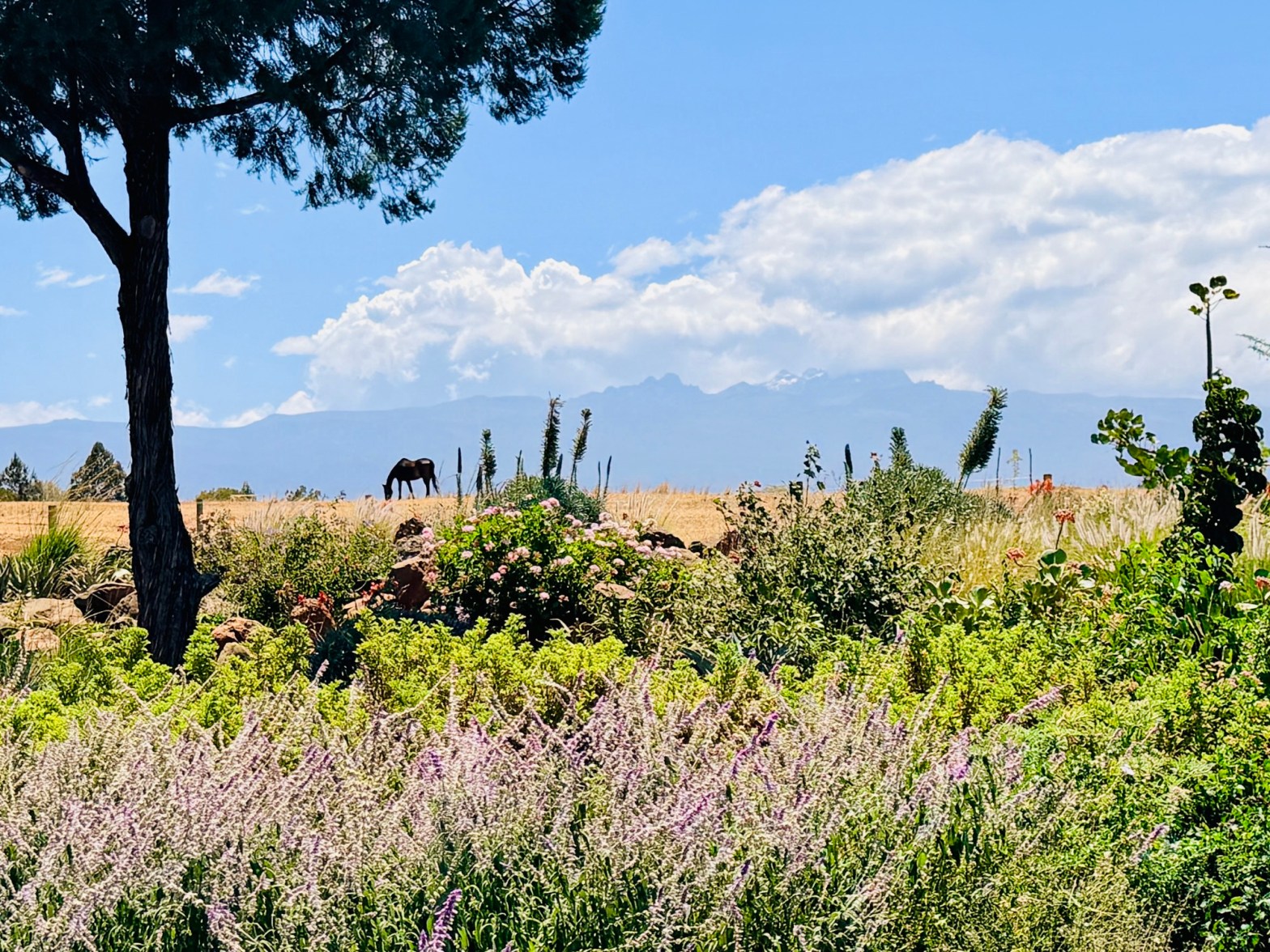
Pole pole is how I want the feelings and memories of our recent trip to to Africa to subside. In Swahili pole pole means slowly slowly…
We have spent the last month in East Africa, specifically Kenya. Many people speak about the strong emotional feeling and connections they experience when visiting Kenya or other parts of Africa. Why is that? Perhaps it’s because it’s often called the “cradle of humankind”. This is our origin story, the place where it all began, in the Great Rift Valley. It’s the place where modern humans evolved 300,000 years ago and slowly migrated out of the African continent. Why this strong feeling of connection to Africa? Because…there is a piece of Africa in all of us!
As foreshadowed, in the final paragraph of my Year in Review 2025 blog post (see link), going forward I am not going to feel constrained to making all my blog posts totally swimming-related.
In trying to keep this blog somewhat tight, I will write about the four phases of our adventure and maybe a nod to swimming.
After a long trip from San Francisco to Nairobi and a recovery night/day at the Hemingway Hotel in Nairobi’s leafy suburb of Karen, we alighted at Olepangi Farm about a 5-hour drive from Nairobi.
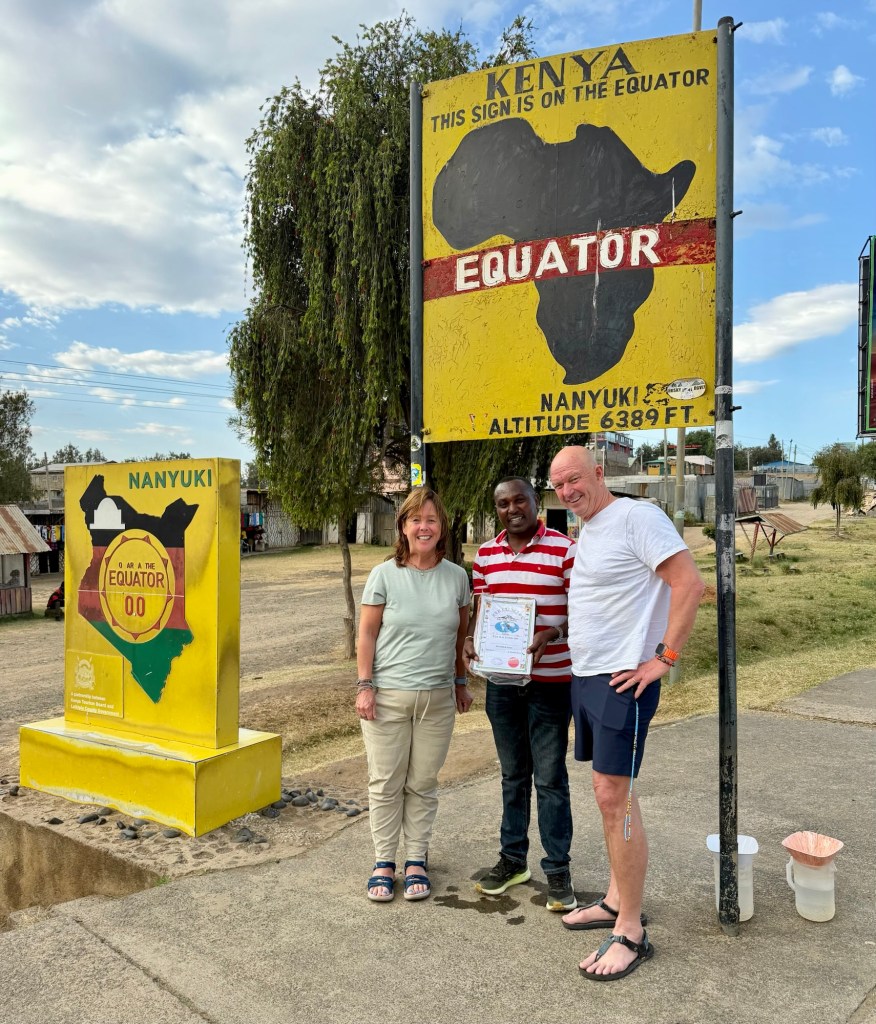
Olepangi Farm is in Laikipia County, north of Nairobi, in the foothills of Mt. Kenya. Olepangi was an idea conceived and created by Shannon’s high school friend, Elizabeth. Elizabeth’s backstory and passion for Africa are worthy of a dedicated blog in and of itself, likely titled, Dreams Can Come True.
In Greek, biofilia means “love of life” and it is the idea of the innate human tendency to connect with nature and other living systems. Biofilic design takes that philosophy and incorporates it into the architectural and interior design process of buildings and spaces. Elizabeth and the team have built a truly awe-inspiring 100-acre working organic farm and lodge out of a barren, rugged land that fully represents biofilia and biofilic design— a connectedness to nature. In fact, they have planted over 6,000 trees over time on the farm.
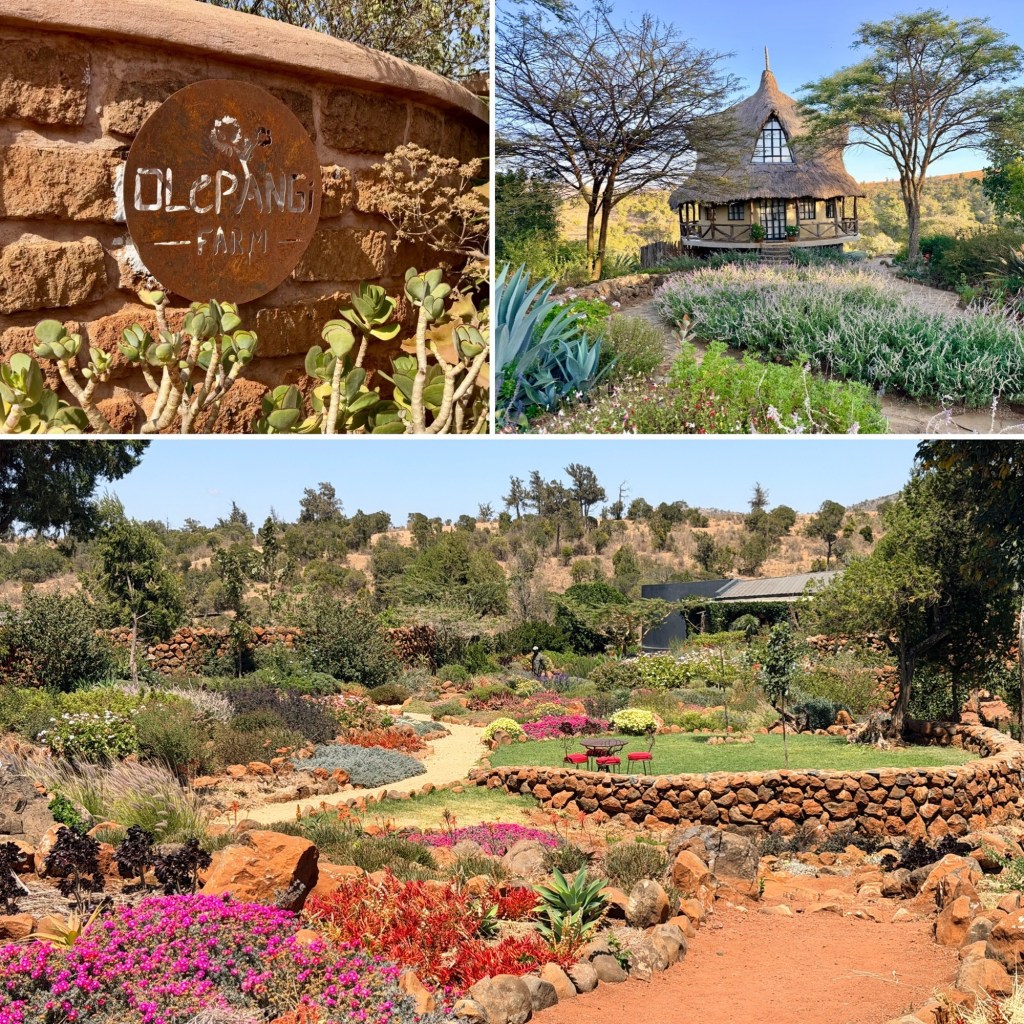
The expansive views of Mt. Kenya, the gardens and landscaping, architecture, interior design, and the infrastructure to support a working farm in an environment like this are actually hard to put into words. You honestly have to see it and feel it to fully appreciate it.
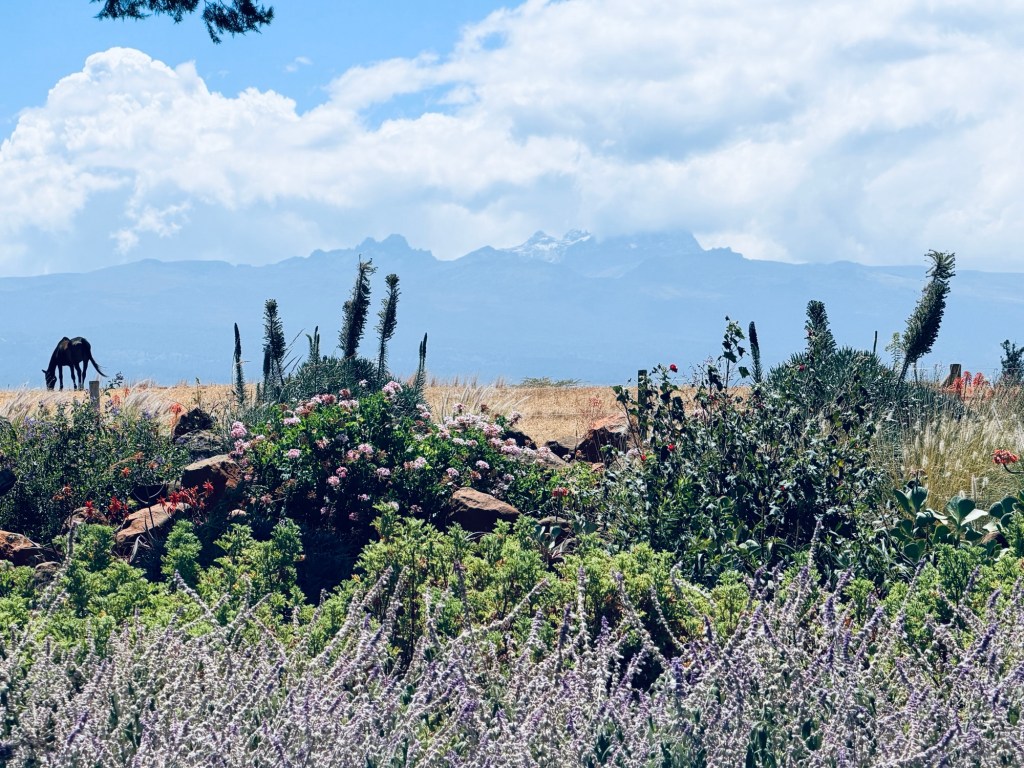
We spent almost a week getting into the rhythm of life on the farm. There were walks where we learned about the unique and sustainable practices of the farm. We rode horses and even milked cows.
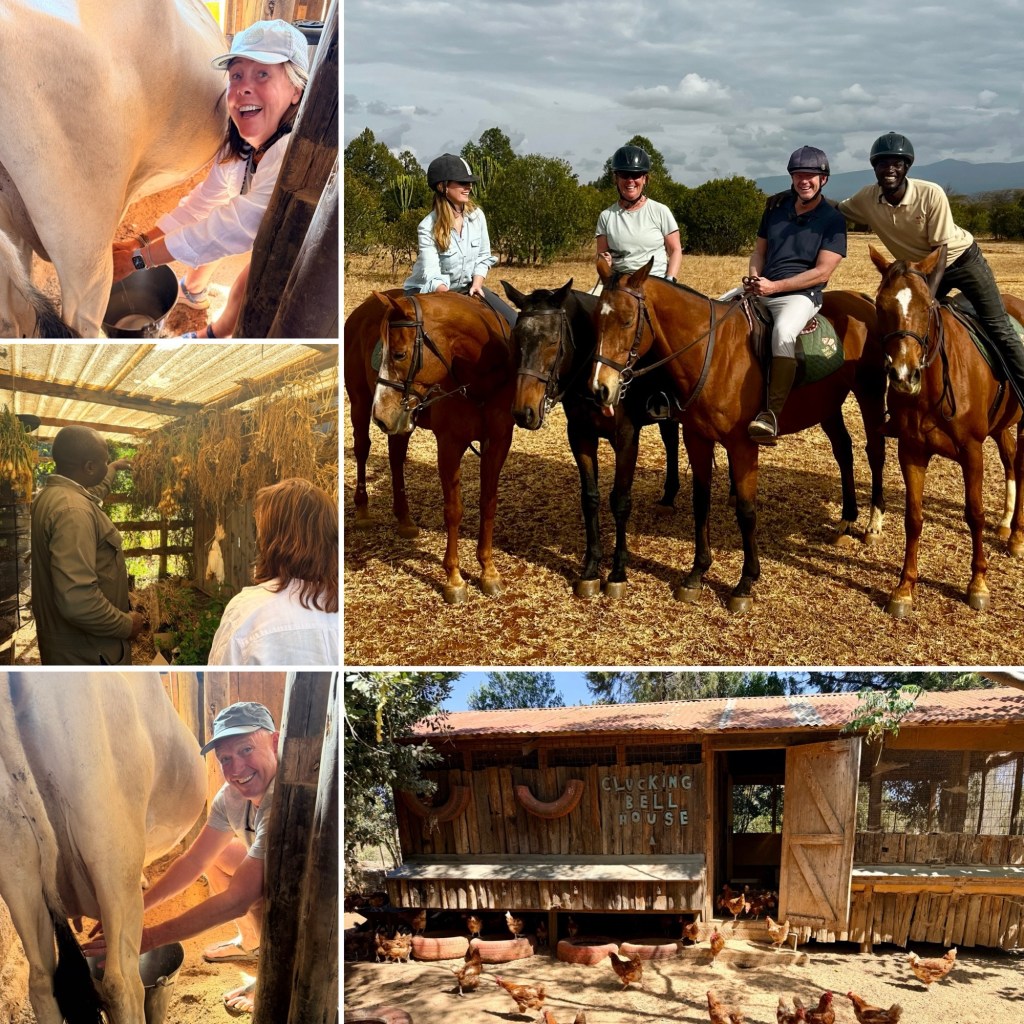
A community walk with Mr. Kariyuki, a local legend, shared local history and his well-thought-out feelings about the world. It was an insightful and enjoyable walk.
We went on several day trips to see the Ngare Ndare forest with its natural blue pools, and Ol Pejeta Conservancy.
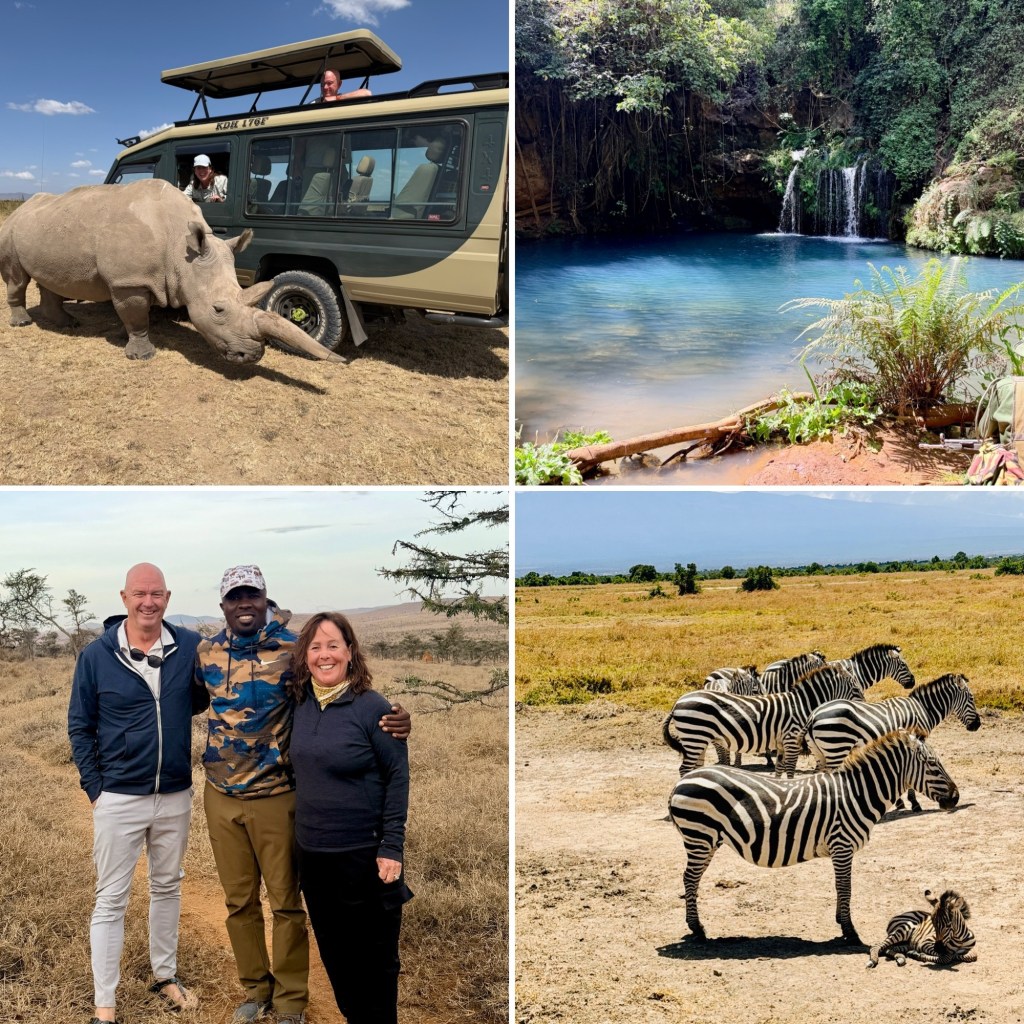
There was special evening game drive and sundowners at Llodiagas Conservancy, close to the farm, to celebrate Elizabeth’s birthday.
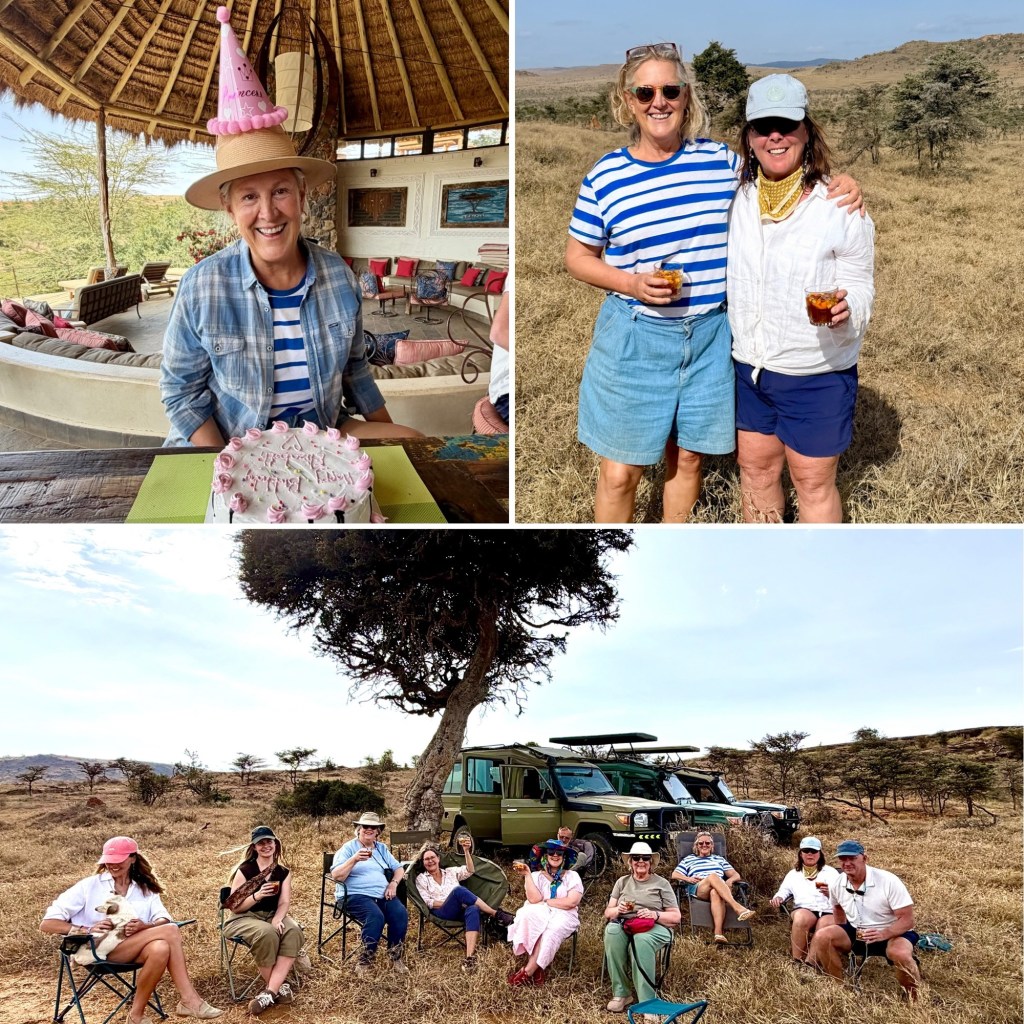
There were also times where just sat in the many unique places “to be” took it all in and caught up with Elizabeth, Kier and new friends.
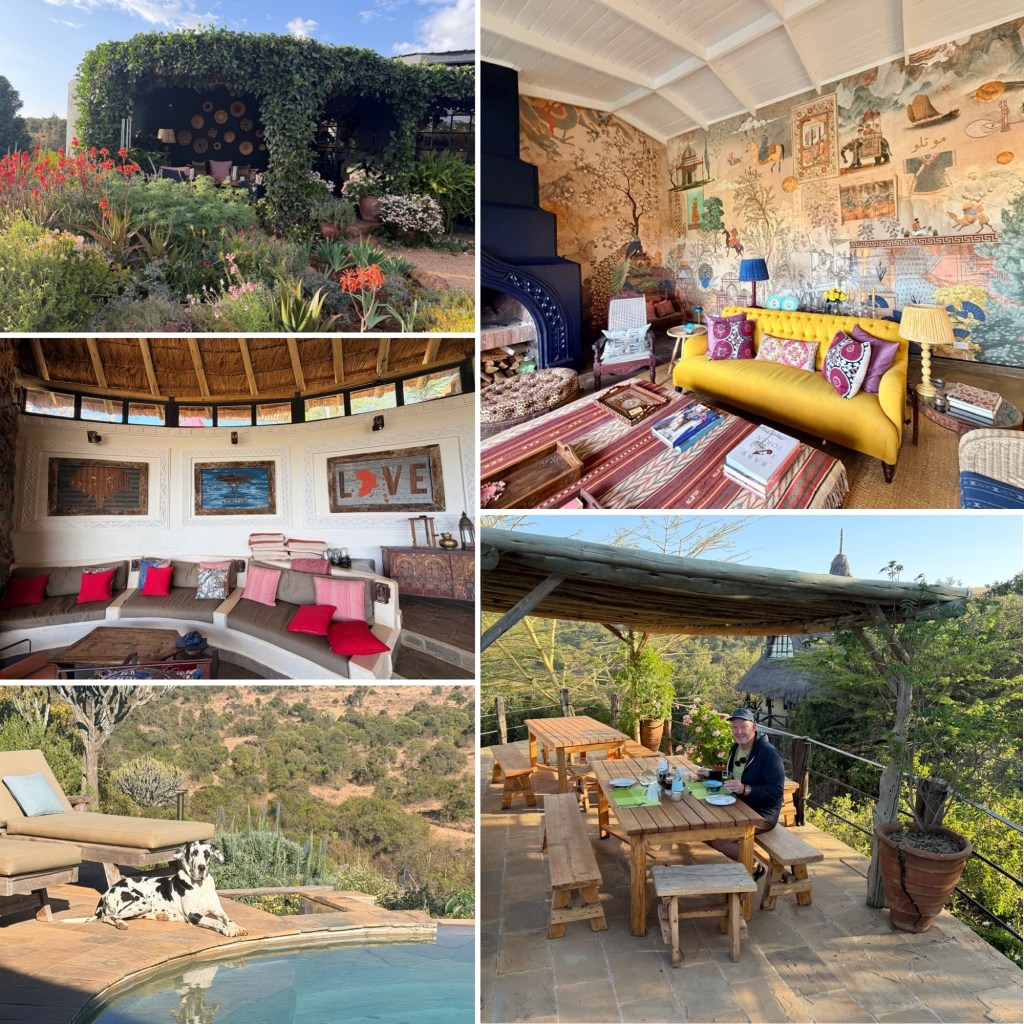
Meals were communal events where we met fun and interesting people. The hospitality and engagement of the Olepangi team were fantastic. They truly understand that they work in a unique and special place.
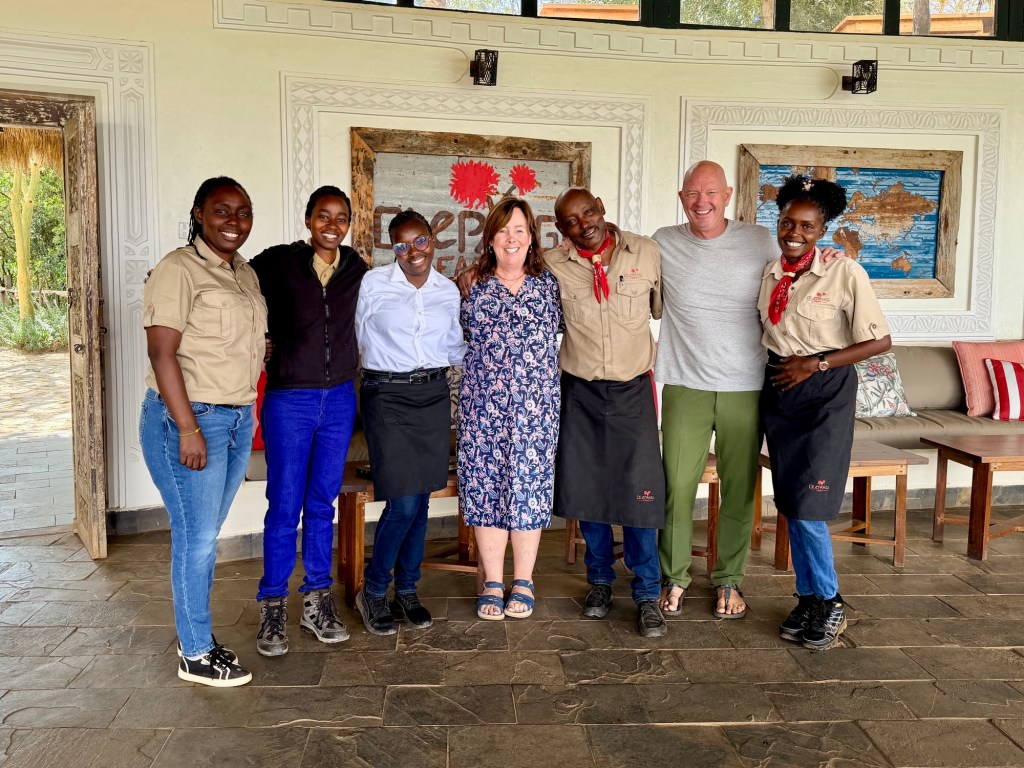
Yes-one feels a sense of biofilia at Olepangi Farm. Looking forward to going back (in May)!
The next phase of our trips was full-on safari mode. We went to two conservancies with different ecosystems. First was Borana, a 34,000-acre conservancy just over an hour away from Olepangi. We stayed at the Borana Lodge, that sits atop a hill with sweeping views of the rangeland.
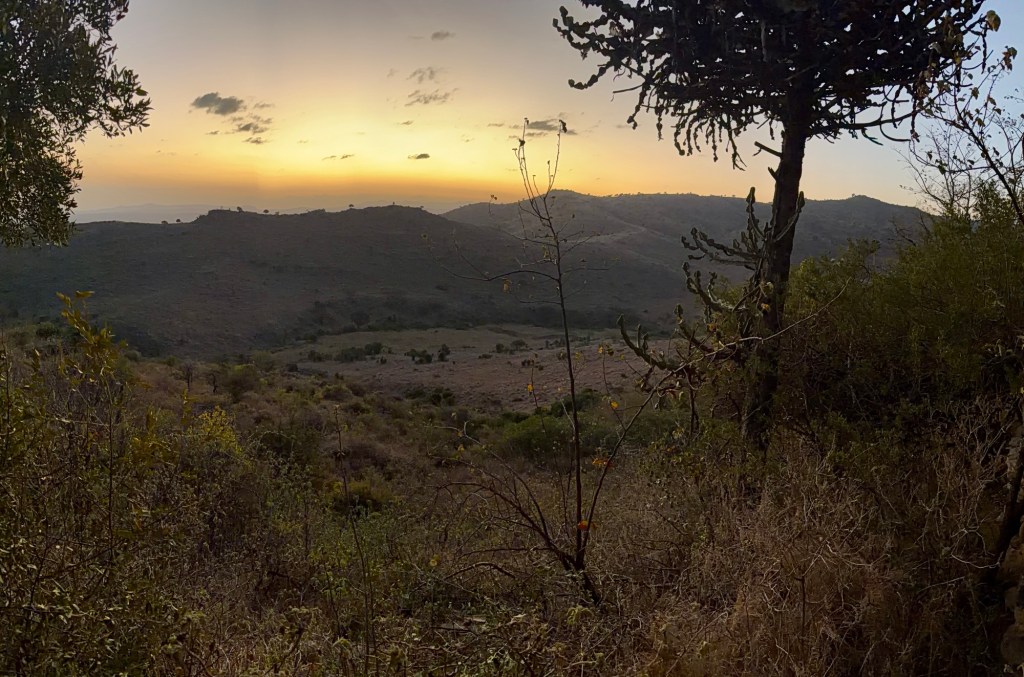
Our mornings started early around 6:30 a.m. with a game drive to catch the animals in motion before the heat and animals settle in for the day. Post-game drive, we had gourmet breakfasts and lunches, and enjoyed the lodge area and some downtime.
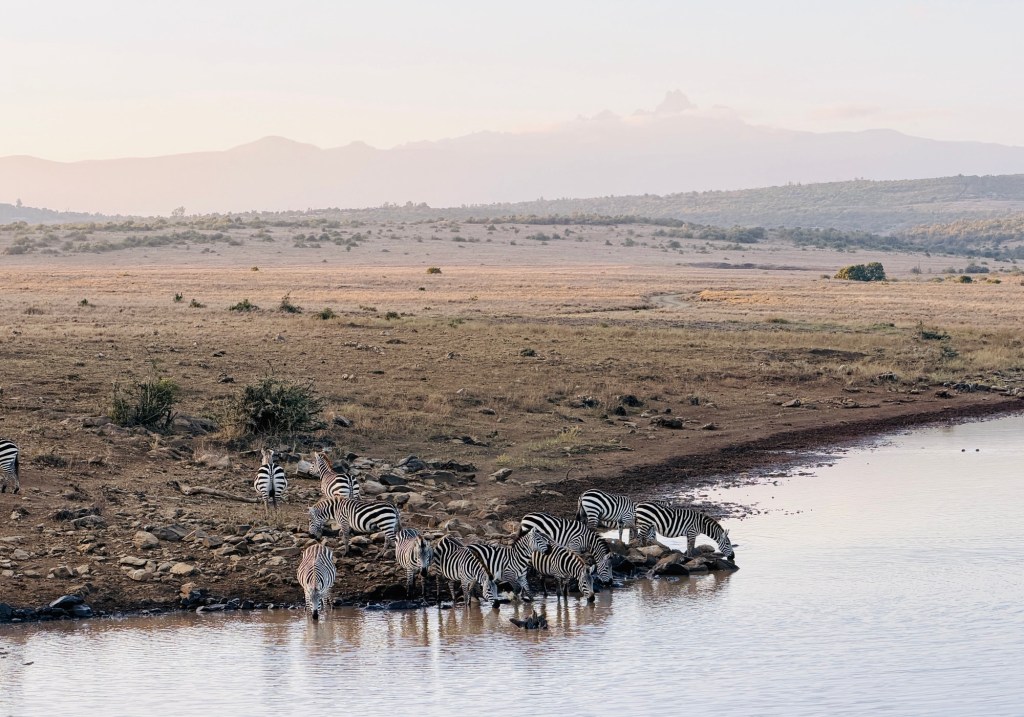
The evening game drive always had sundowners in the bush while enjoying the incredible wildlife and scenery. Our guides, Jimmy and Benedicta, were very informative and fun to be with. Post-game drive, another round of sundowners and dinner in the lodge’s beautiful common area.
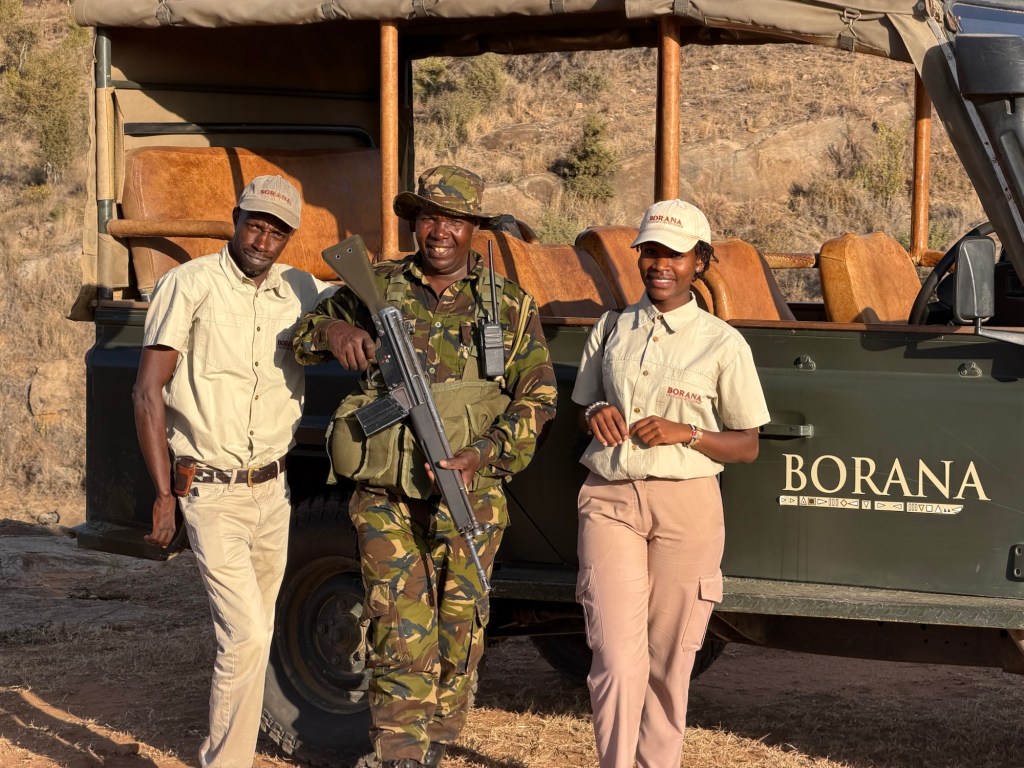
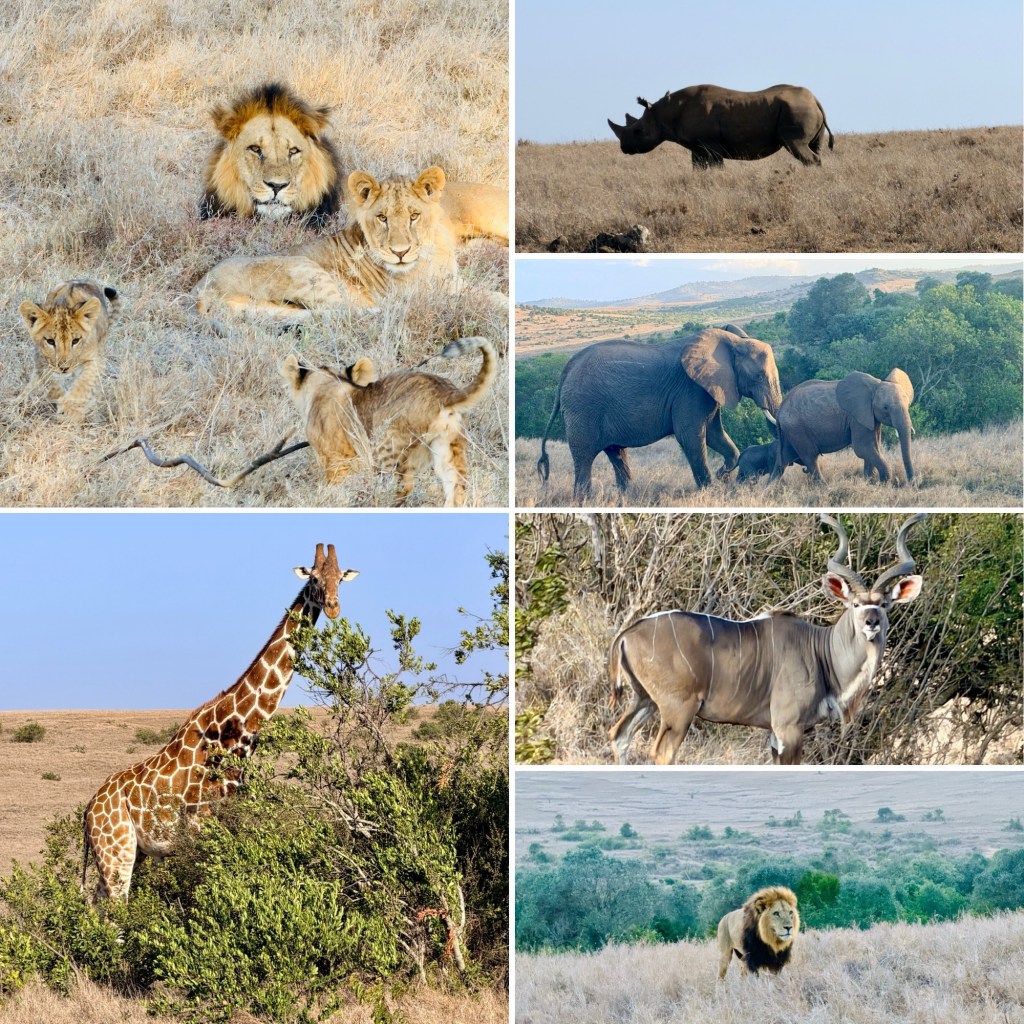
There was so much to remember and treasure at Borana; however, there were three things that stand out. On our first evening game drive, we stumbled into a large pride of lions, lionesses, and cubs just chilling in the bush around sunset. They were so close to us.
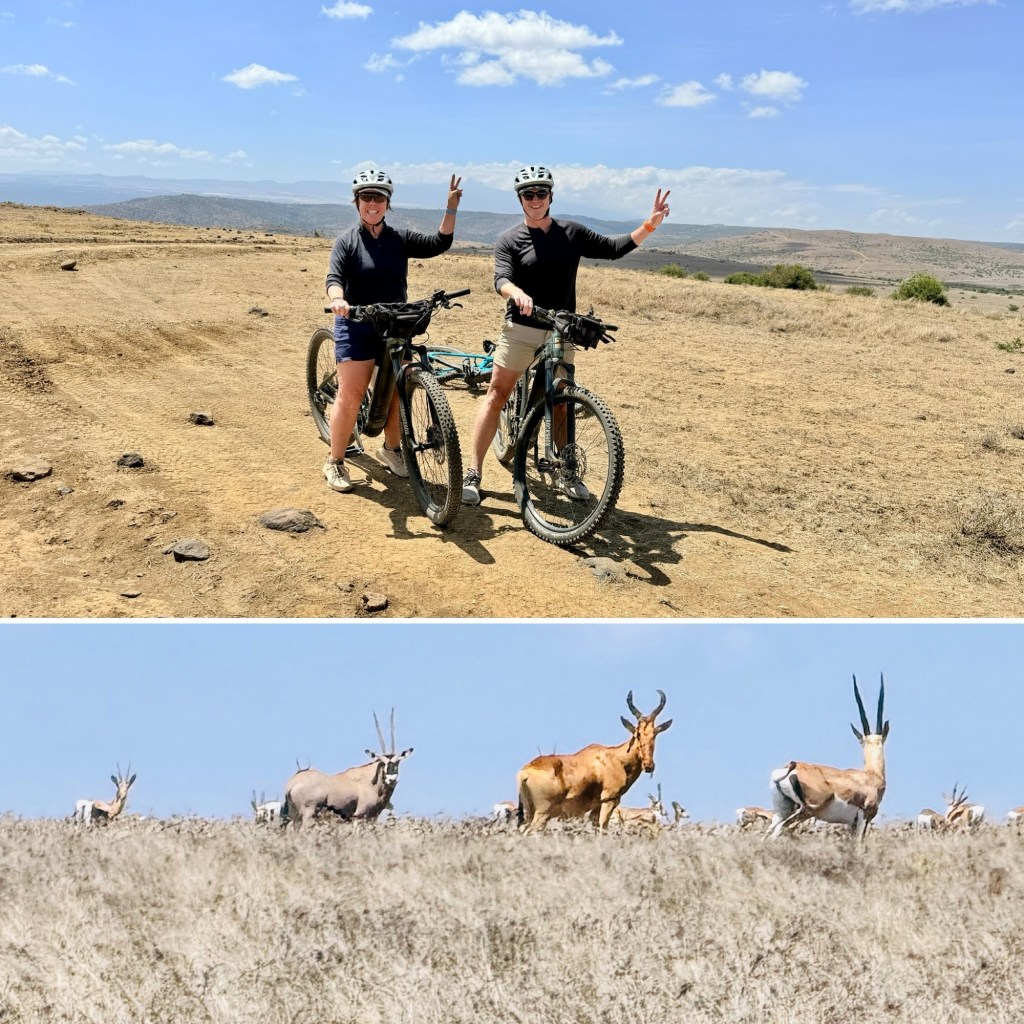
After breakfast one day, we went on a bike safari. I asked for e-bikes, thinking if we got in trouble, we could outrun the wildlife—ha! It was cool to be out on bikes in the range land, passing by gazelles, zebras, and hartebeests. We did pass some elephants, where it was a bit tense for a moment.
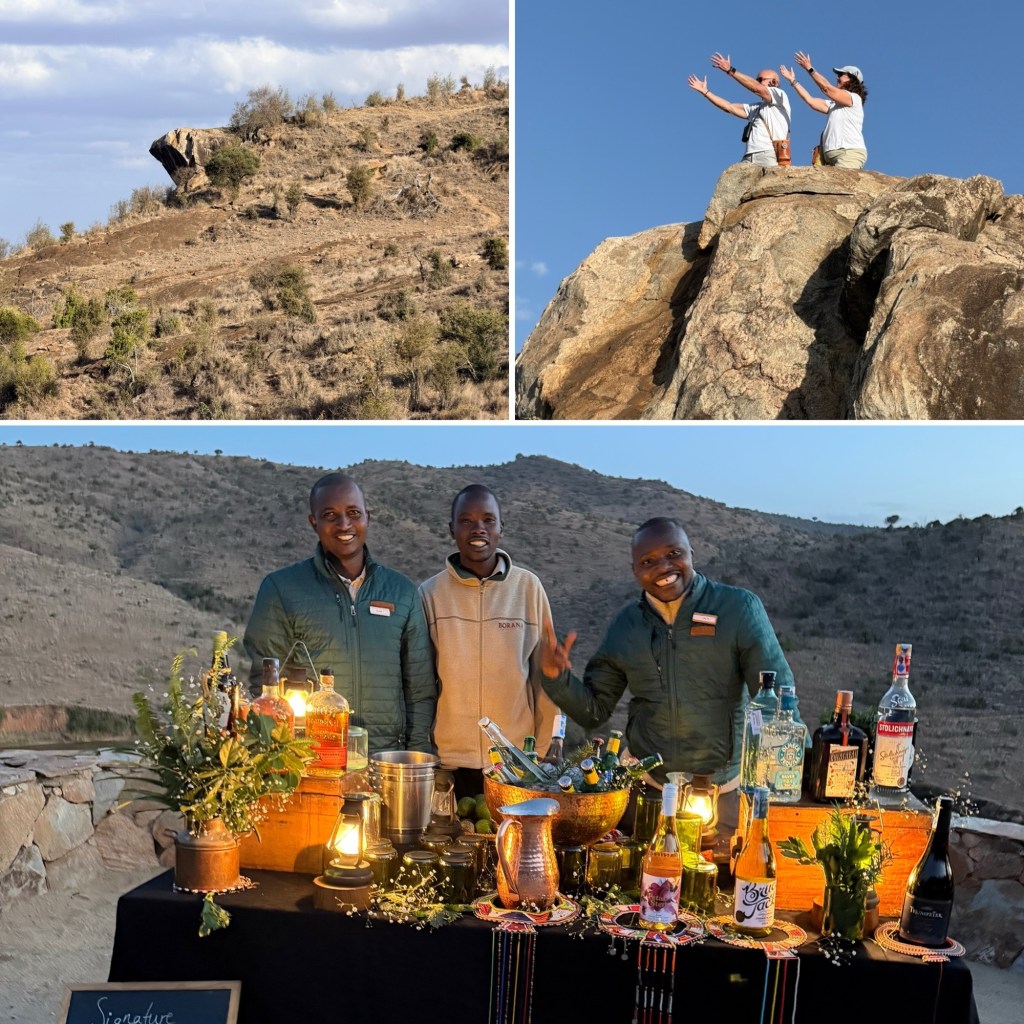
Lastly, there was a walking safari where we ended up at Pride Rock. Yes, the rock outcropping that was the inspiration for the Disney movie, The Lion King. Following a short evening game drive, we enjoyed a Kenyan barbecue with other guests under the stars in a beautiful setting.
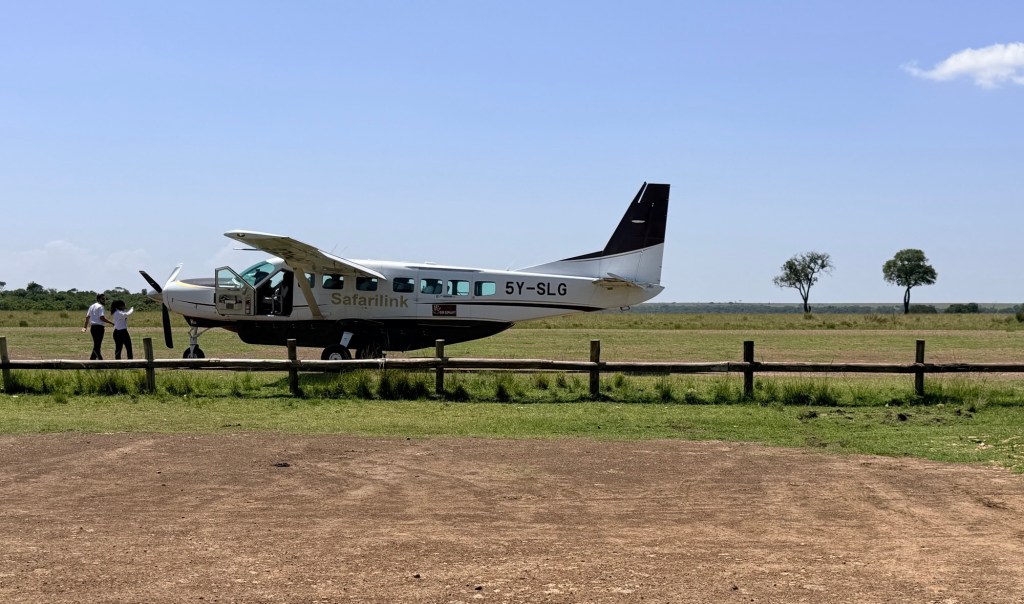
After Borana, we headed to the private Mara North Conservancy via bush plane. It’s a fun experience to see zebras and giraffes as the plane rattled down dirt runways.
We stayed at Alex Walker’s Serian camp on the banks of the Mara River. In our luxury tent, we could clearly hear the hippos a mere fifty meters away in the river. The savannah landscape of the Mara is more typical of what you think of Africa, with vast open plains and umbrella-shaped acacia trees.
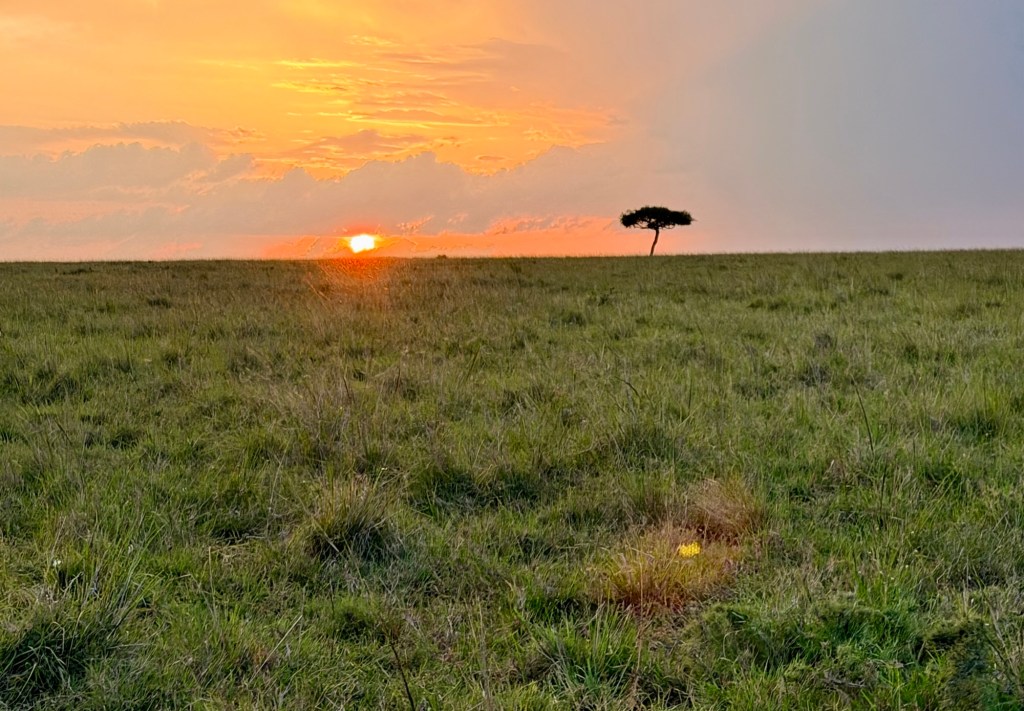
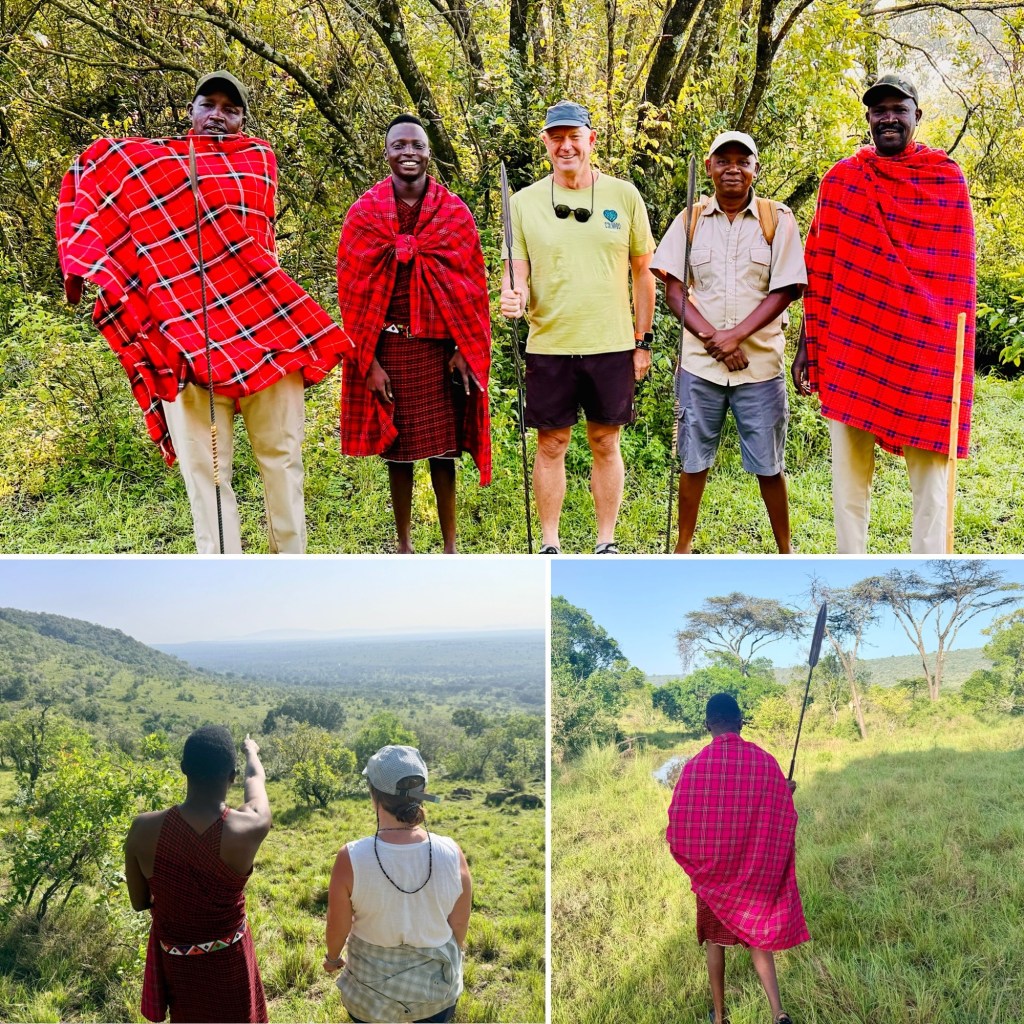
Joesph, our Maasai guide and driver Kim were great. We learned so much from them about wildlife, geography and importantly about the Maasai culture.
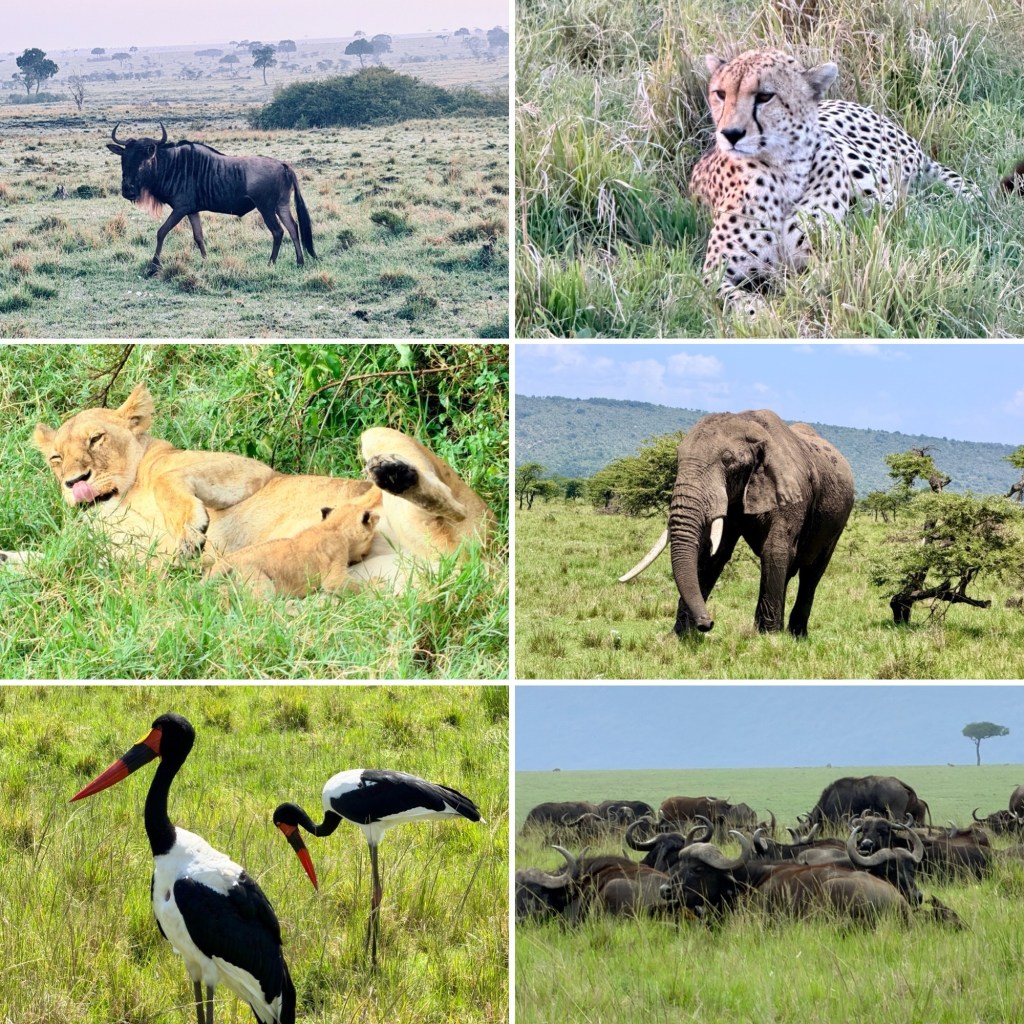
There was a night game drive where we had dinner in our Land Cruiser, 10 feet away from a lion. That night we also saw a very vulnerable baby giraffe. Likely, likely born within an hour of us spotting him.
Our 5-mile walking safari from the Mara River to the top of the escarpment overlooking the Rift Valley was a real treat too. The only protection we had were the keen instincts of our guides and their spears—we felt safe the entire time.
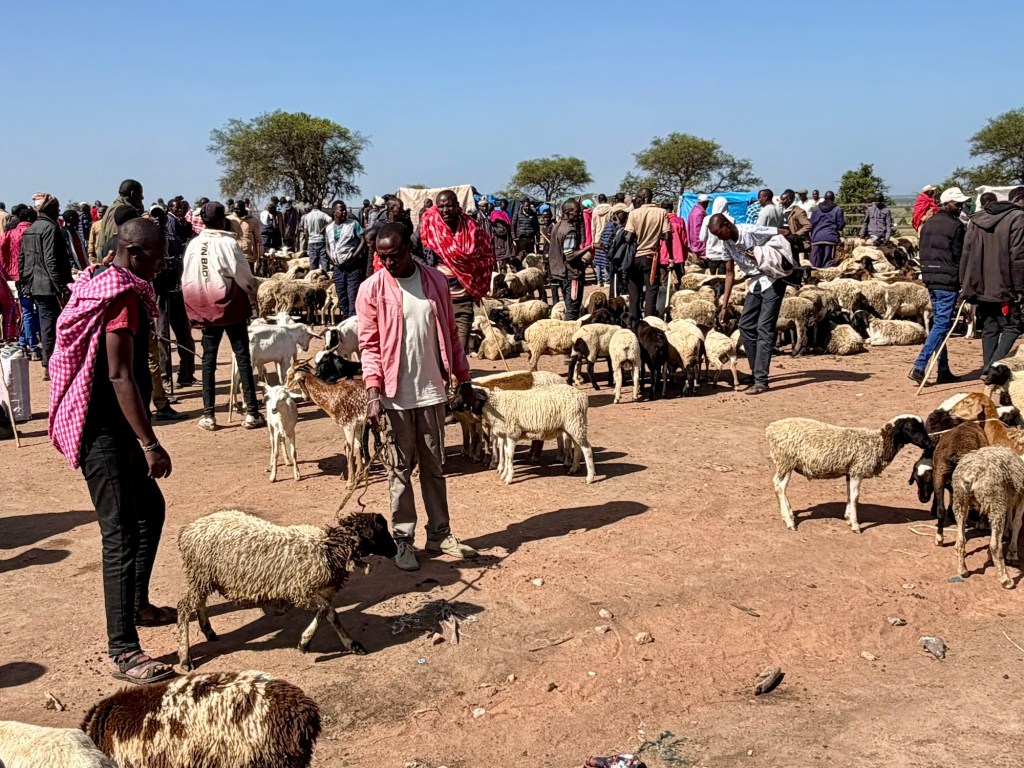
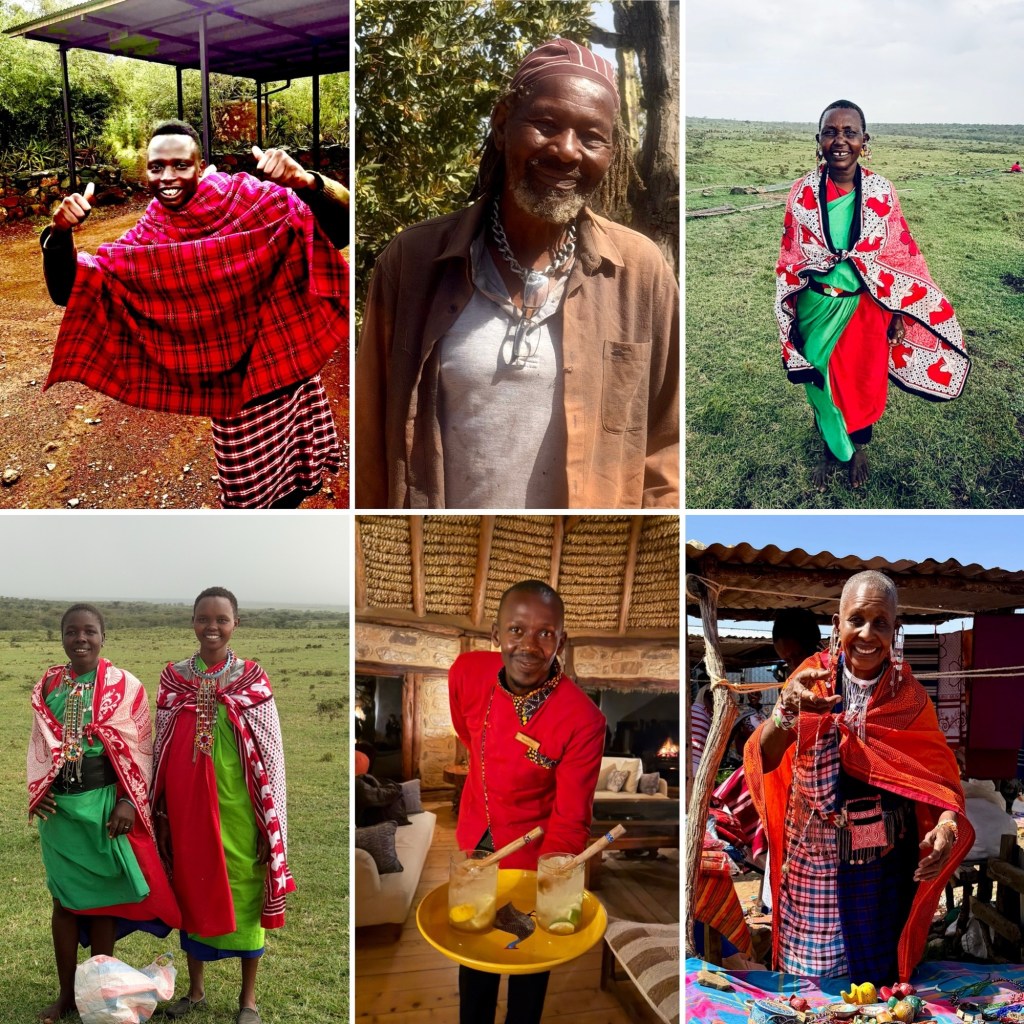
A highlight of our time in the Mara was spending time with Joseph at the local Maasai Market and then at a local Maasai Village. The community market was very “local” with people buying and selling cows, goats, and produce. At the market, we bumped into Joseph’s dad, uncle, and grandma. That was fun!
The Maasai village was very, very small and traditional. We saw their homes and learned about how they live. It felt very personal as it was just Shannon and I engaging with them.
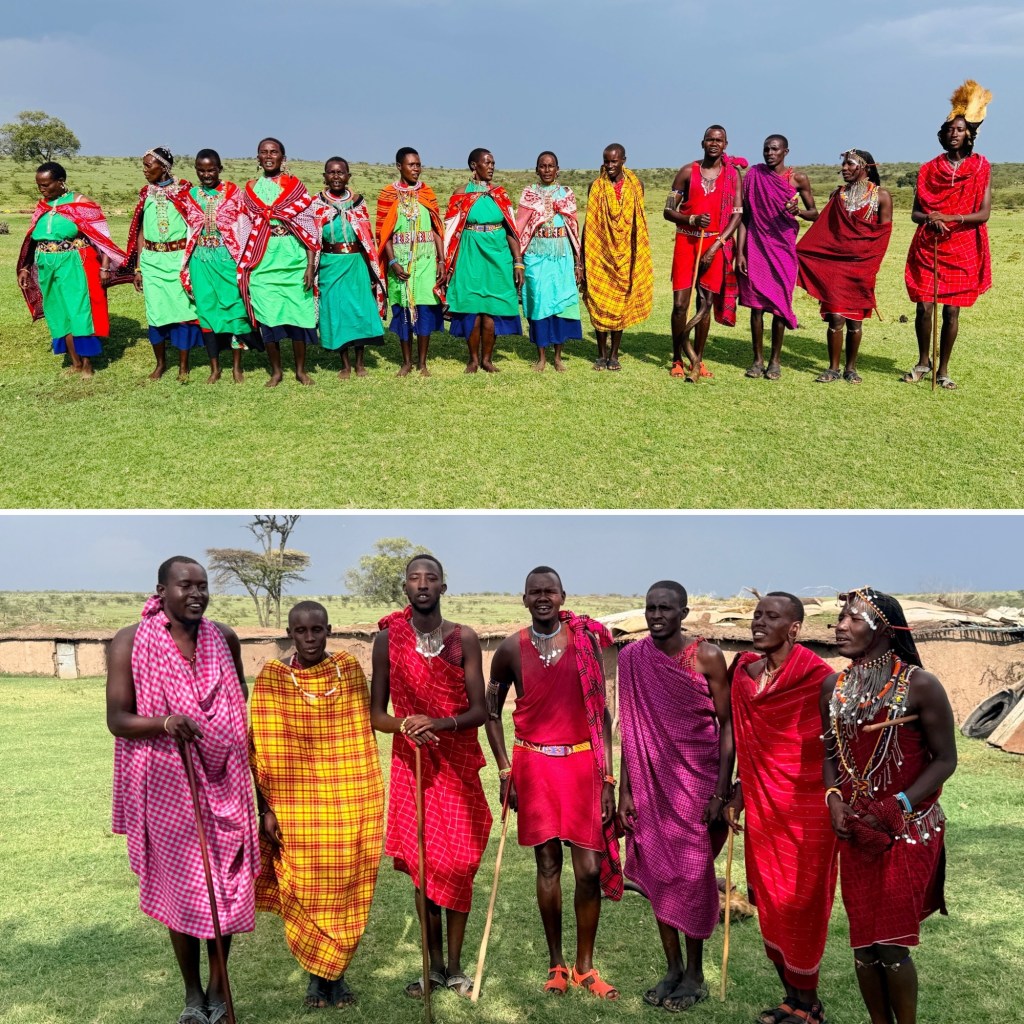
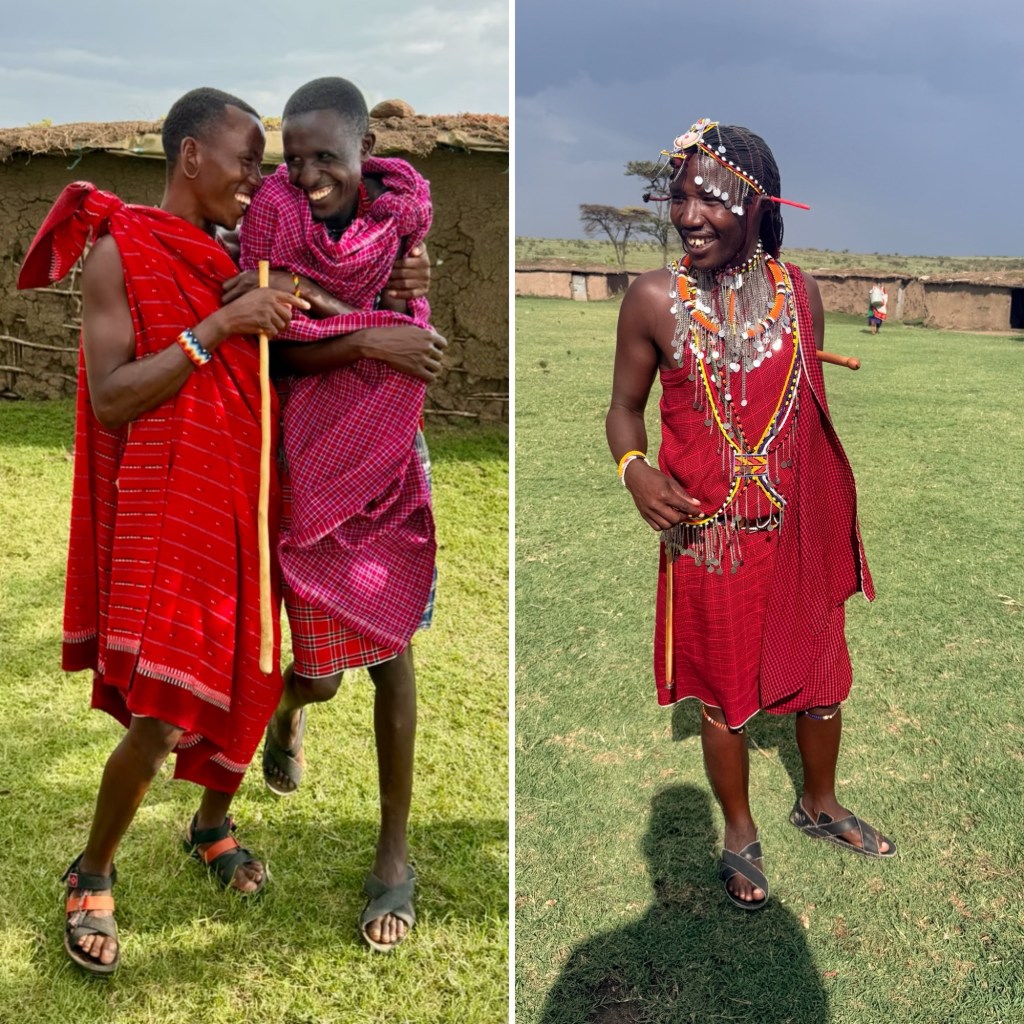
Joesph is an engaging young man. He is very proud of his Maasai history and culture. We really appreciated learning from him. I hope our paths cross again in the future.
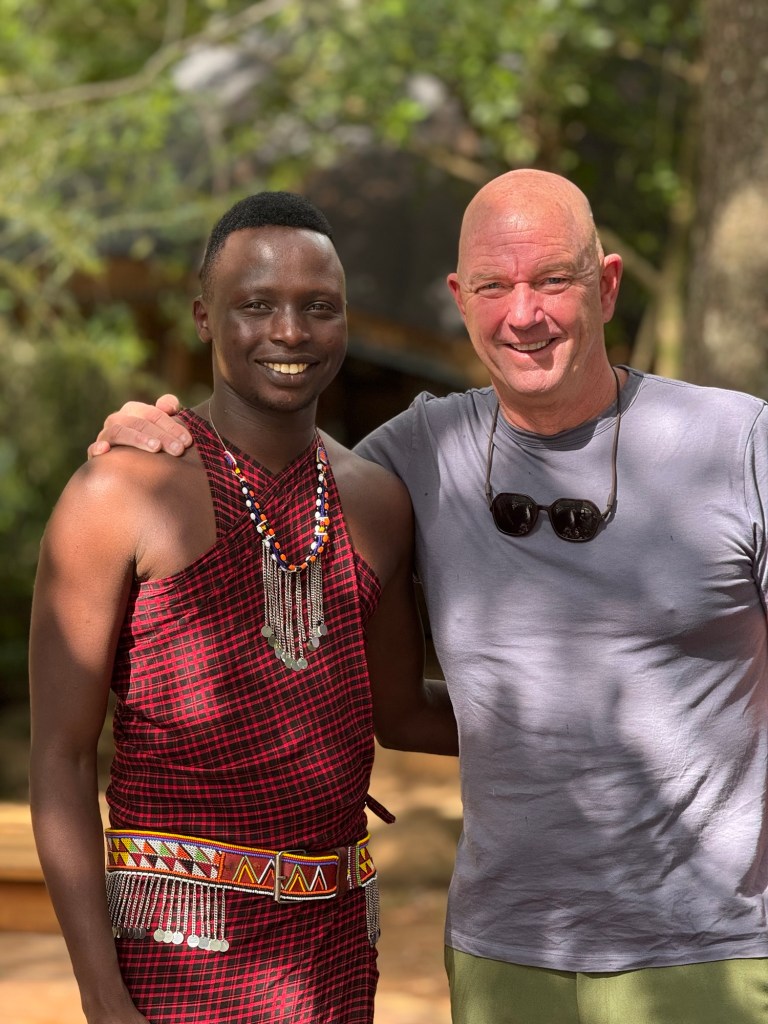
I learned that conservancies are more than just the protection of wildlife. In addition, it is protection of these fragile ecosystems, and the management of land use so local communities can live and grow side by side in a sustainable fashion.
The next phase of our trip took us to Lamu Island off the coast of Kenya for some relaxation. Lamu is about an hour’s flight northeast of Nairobi in the Indian Ocean and about sixty miles from the Somali border.
We had been thinking of Zanzibar for some R&R however Elizabeth told us that we must go to Lamu and stay at the Peponi Hotel. We are sure glad we did!
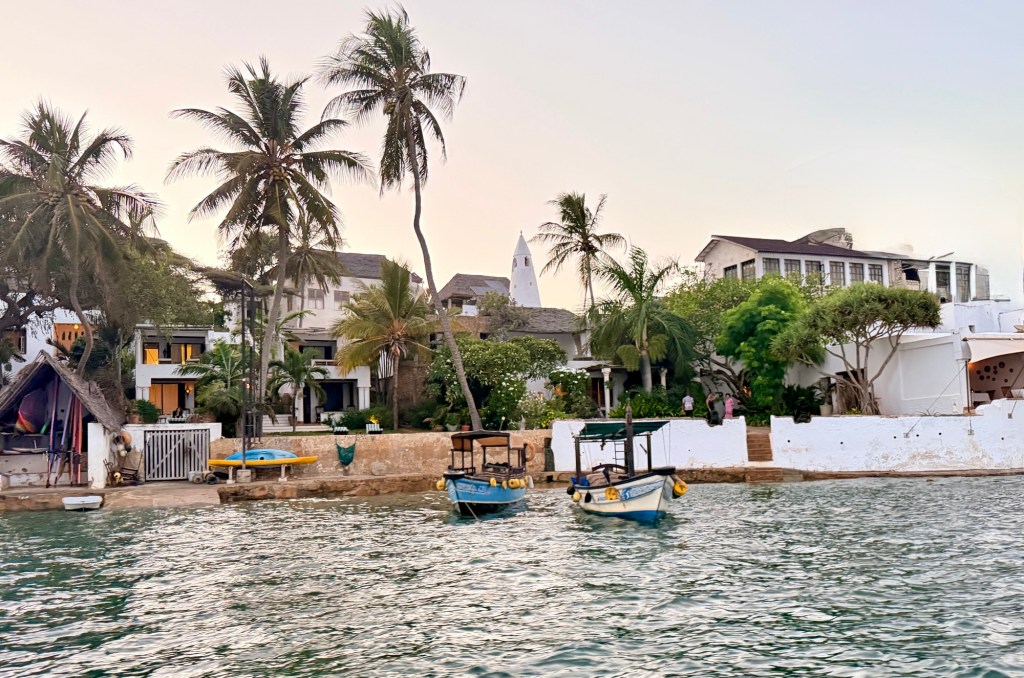
Lamu is a UNESCO World Heritage Site known for its Swahili culture. As an old trading port on the Indian Ocean, Lamu enjoys a mix of many cultures and has a strong Muslim influence. People have inhabited Lamu for roughly 700 years.
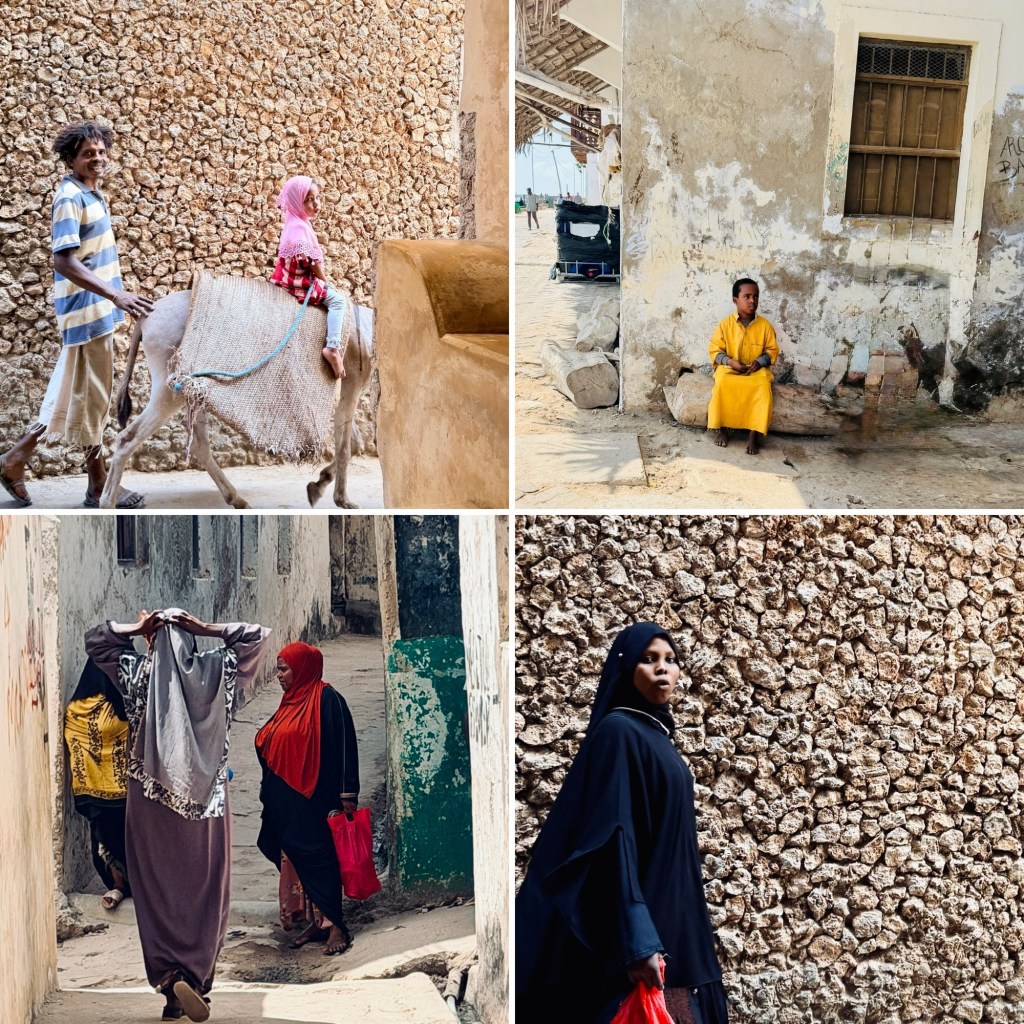
There are no cars on Lamu; however, there are lots and lots and lots of donkeys. I mean, donkeys everywhere: on the beach, the main roads, the maze alleyways, and courtyards around town. Where there are lots of donkeys, there is a lot of donkey…💩
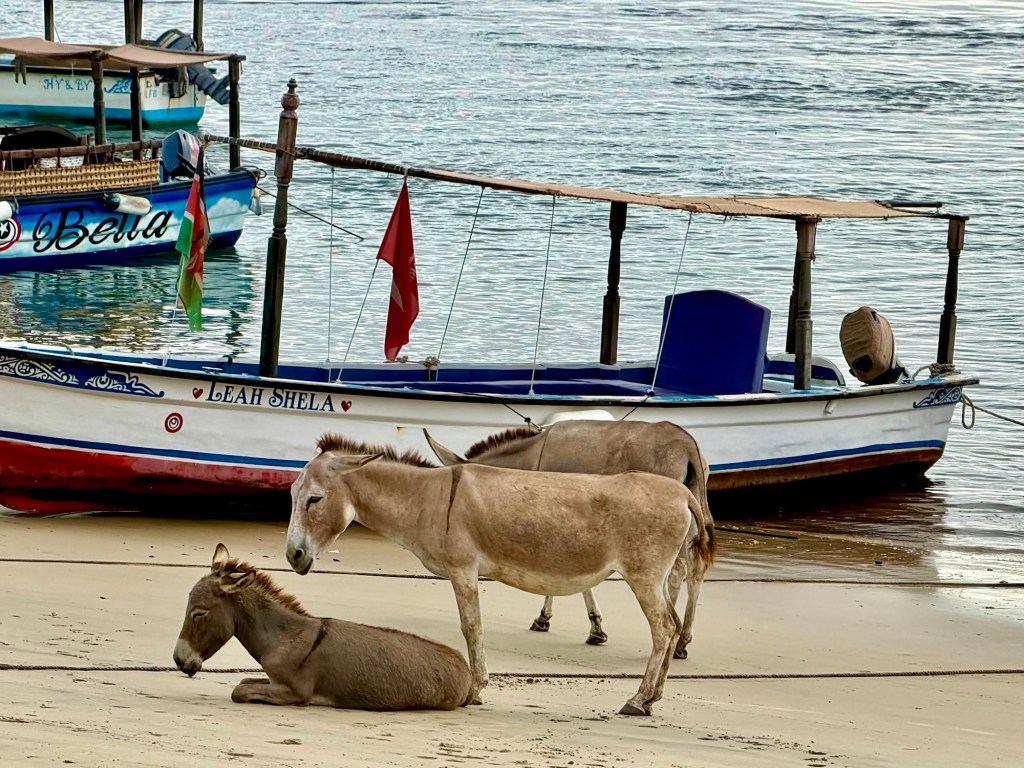
The Peponi Hotel sits on the white sands of Shela Beach. The hotel has a very boho-chic vibe and is clearly a place for Kenyans and travelers “in the know”. It was simple, understated, and very evident that guests return to Peponi on a repeat basis.
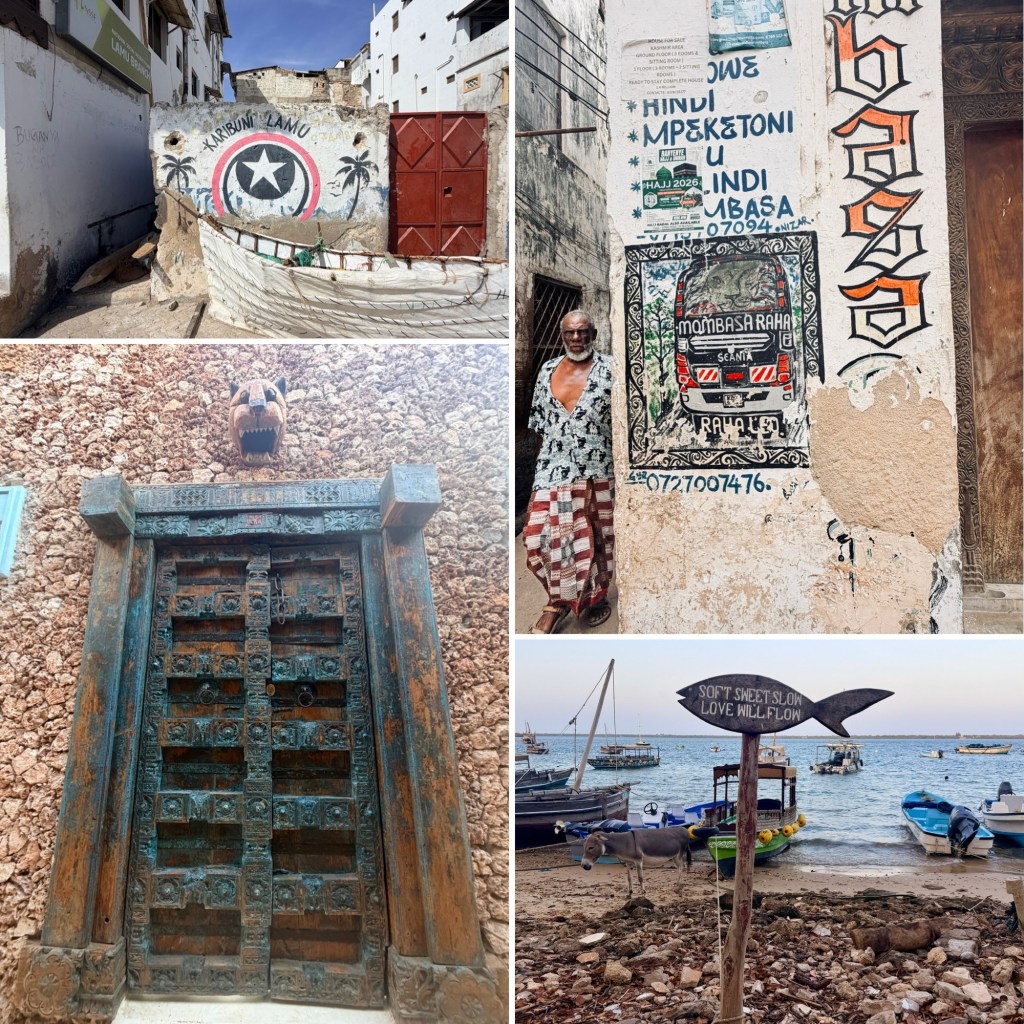
We basically chilled on Lamu. We wandered the tiny streets, not sure what we would bump into around the corner: a dead end, a local artisan market, a coffee shop/café, or a very traditional produce market.
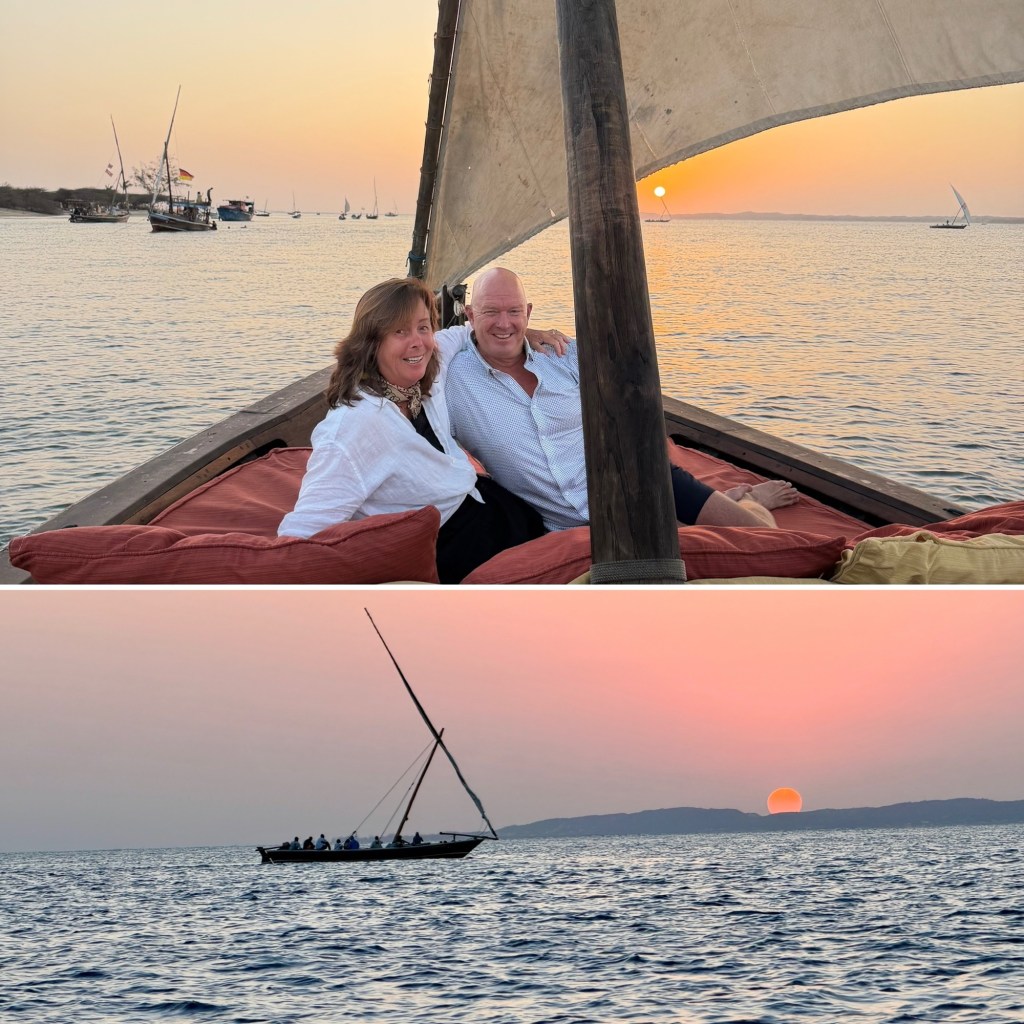
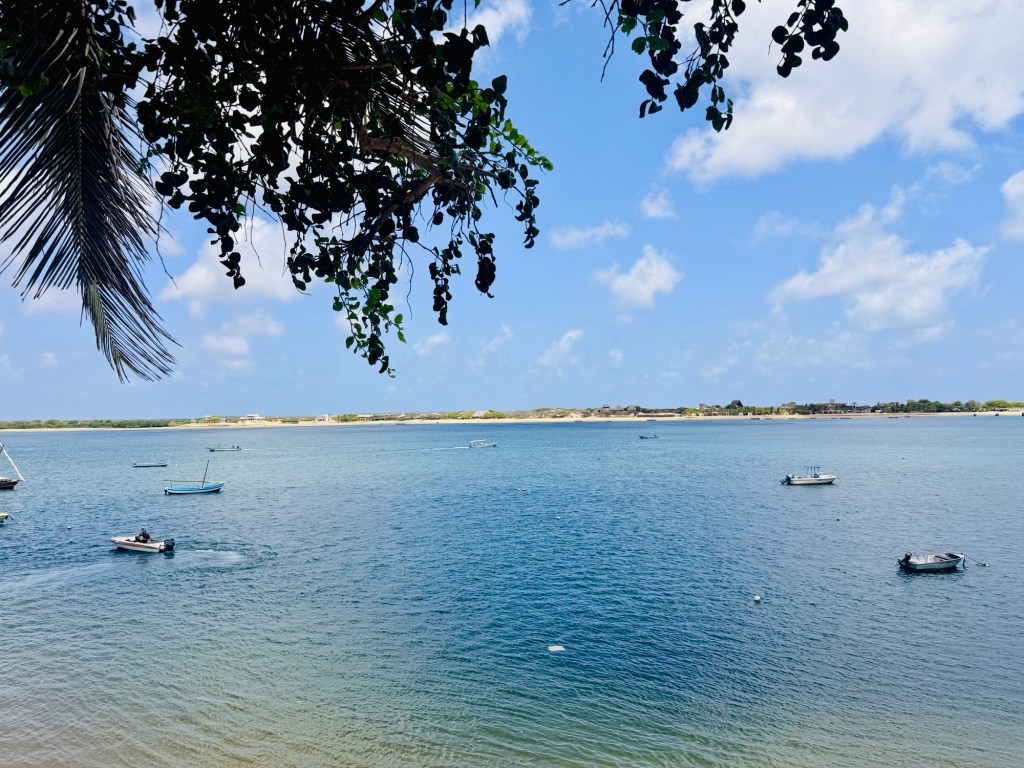
We had a memorable sunset dhow (sailboat) ride in the wide channel between Lamu and Manda Island and through the mangroves of Manda.
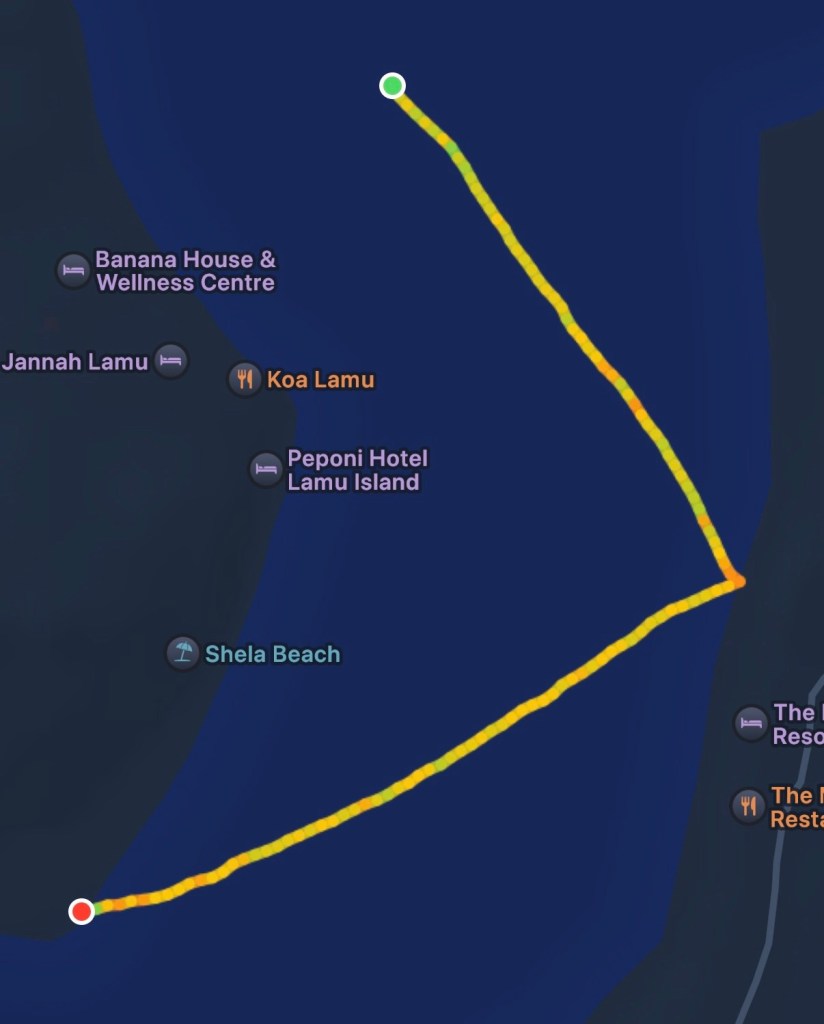
I also got in three swims across the channel. I hired Rambu to meet me at the beach every morning. We would motor up the channel in his boat a bit, and I would jump in the water, swim to Manda, and then swim back to Lamu.
The current was fairly strong, pushing me out towards the Indian Ocean, so my “line” wasn’t very straight. The morning swim sessions were very good for my ego as Mustafa, a Peponi manager, would see me swimming back across the channel and comment, “What a strong swimmer I was!” Yes, these little (big) things matter!
Lamu and Peponi were a perfect way to relax after a few busy weeks at Olepangi and being on safari. It was also a good transition point to our final stop on our trip before heading home and to Dubai.
Dubai was going to merely be a brief layover on our way home. I am so happy we extended for several days to see this desert oasis.
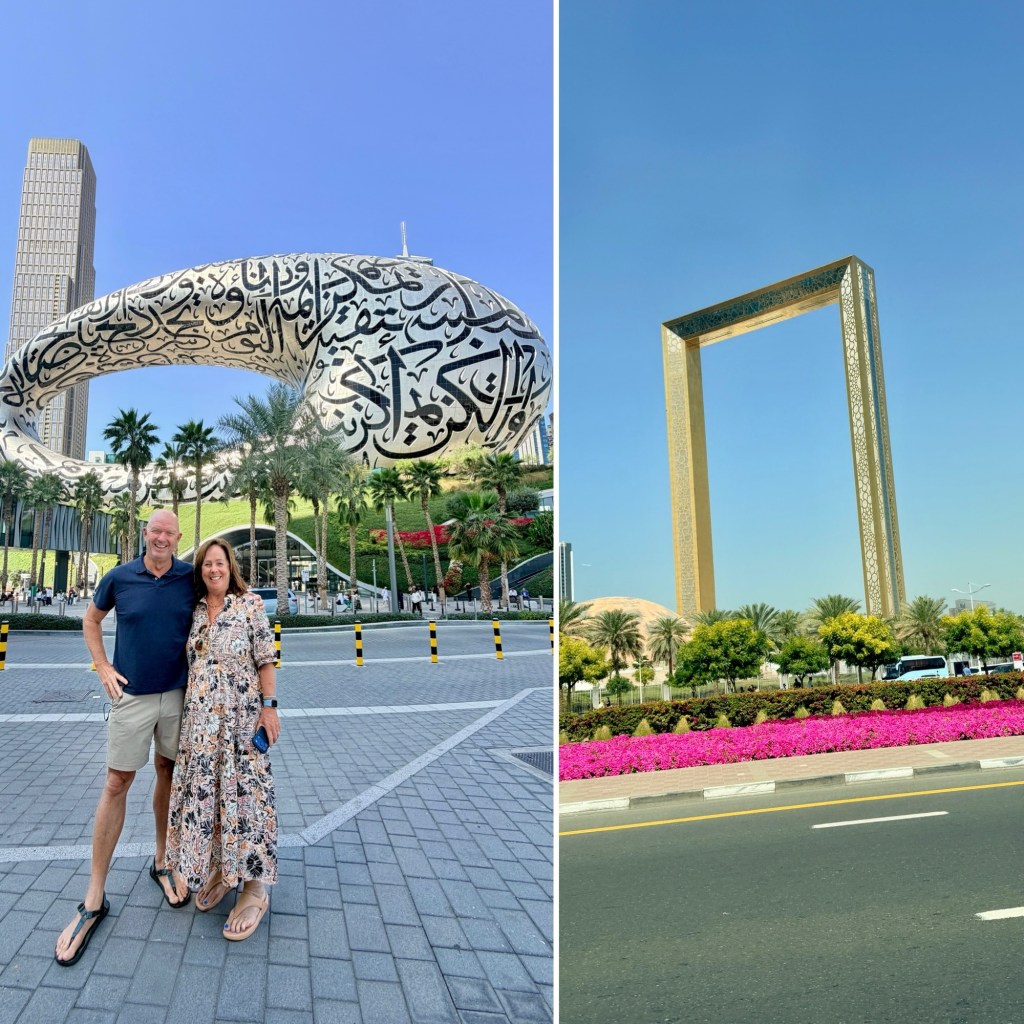
Everything in Dubai just feels big, over the top, clean, and new. It is absolutely remarkable the amount of development and construction of buildings, waterways, and man-made islands that has taken place in 15-20 years. A once barren desert is now a sprawling city with cool architecture that is attracting tourists and expats.
We went on an interesting tour that provided history and perspective of old Dubai and new Dubai and growth plans by the Emirati government.
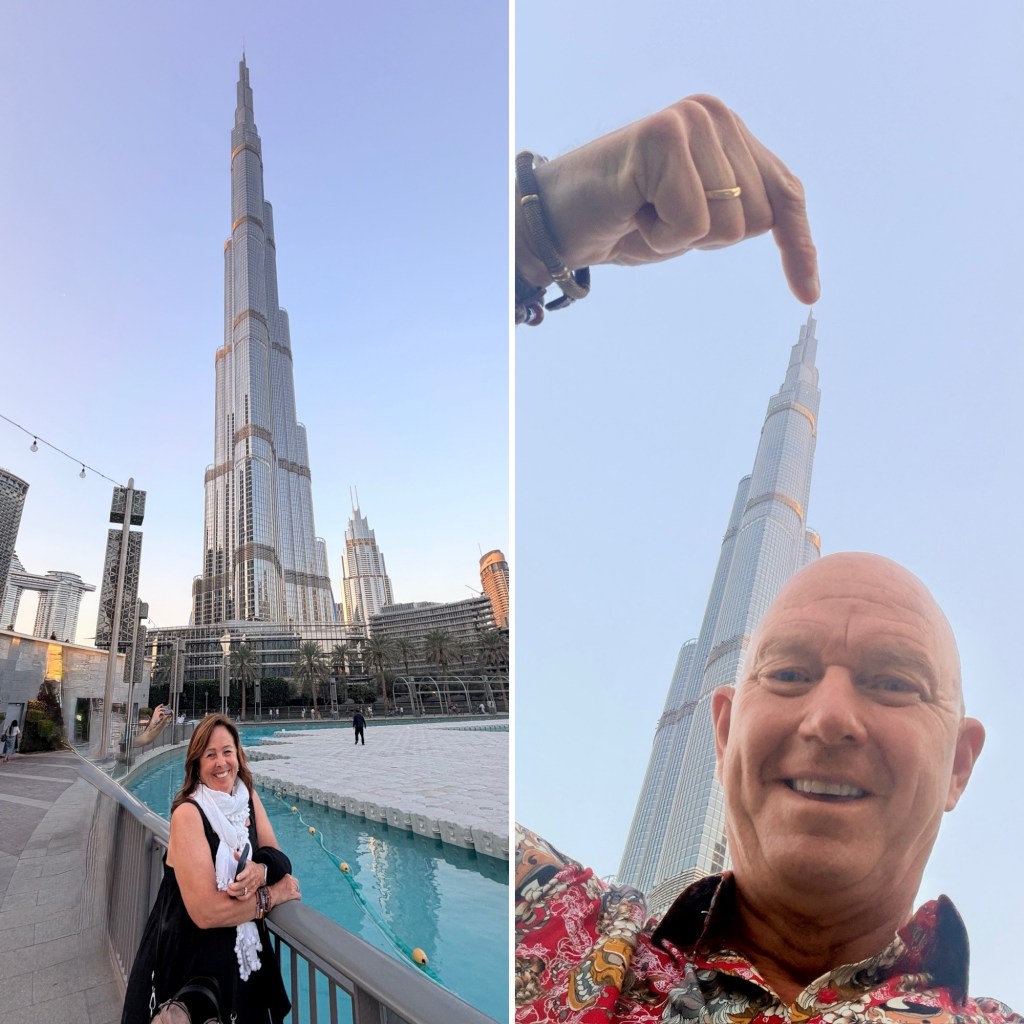
The top of the Burj Khalifa, the tallest building in the world, was kinda cool. The views from the 148th floor stretched on and on, and you could see all the construction taking place in the desert. The Burj is surrounded by the massive Dubai Mall and fountains that dance to music at night.
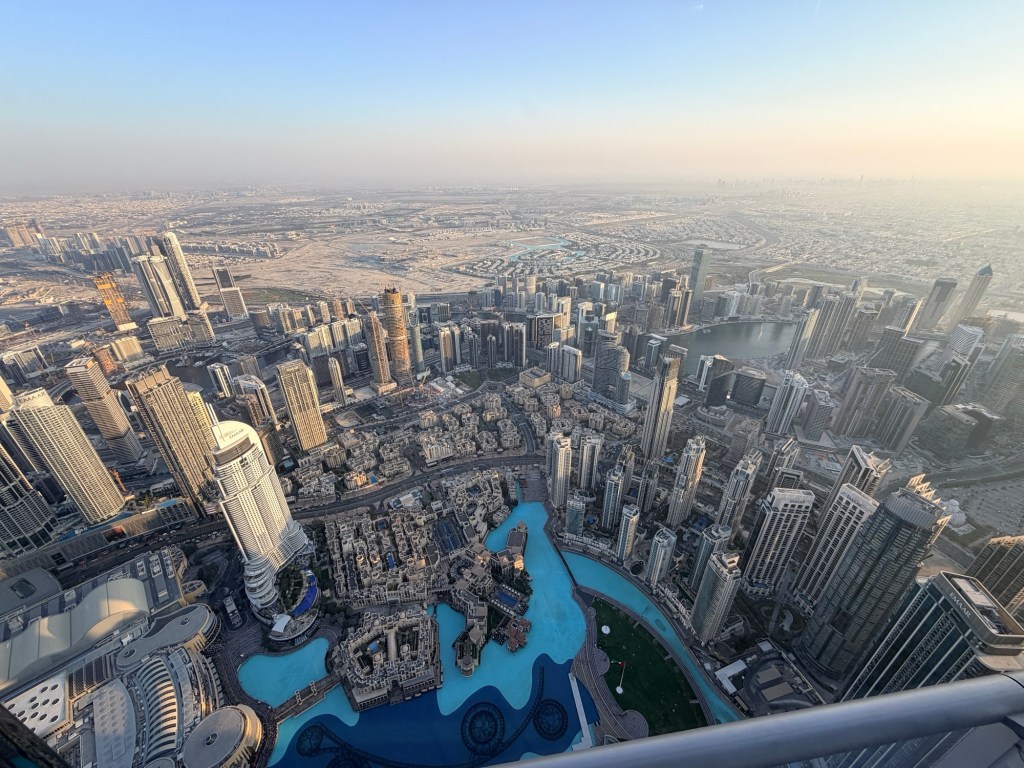
An overnight field trip to the Al Maha Desert Resort & Spa was a total juxtaposition to the over-the-top and newness of the city. The resort sits in the Dubai Desert Conservation Reserve, about an hour from Dubai.
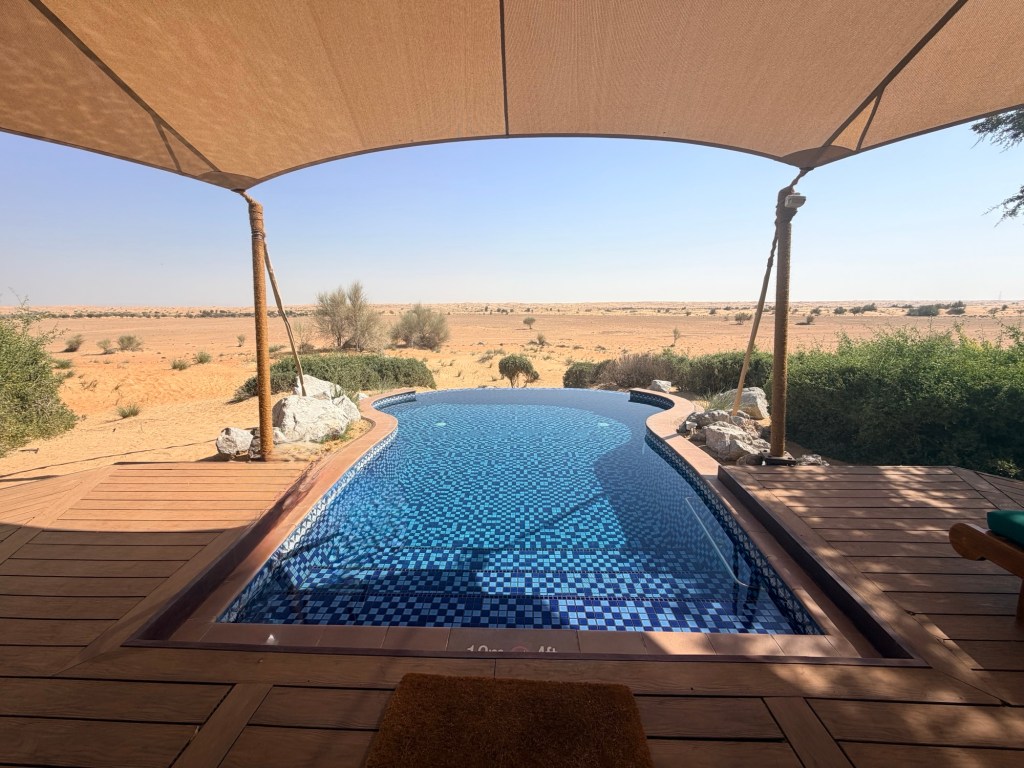
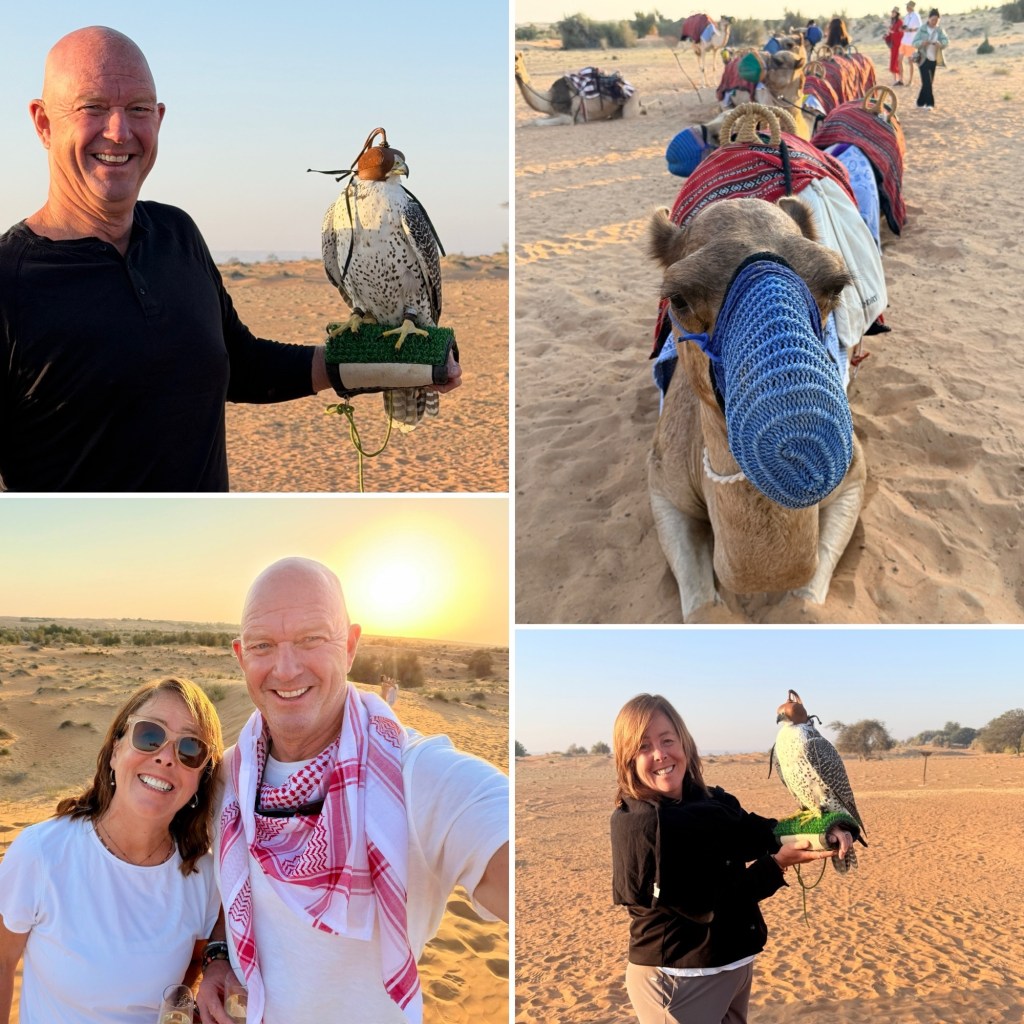
It was a quick 24 hours where we ate well, rode camels, enjoyed desert sundowners and the black starry night sky and saw a falcon show.
Our final night in Dubai was on the man-made Palm Jumeirah island at the Ottoman-inspired Zabeel Saray Hotel. Our time was short, yet we managed pool time, beach time, and a Turkish bath. A perfect set-up for a long flight home.
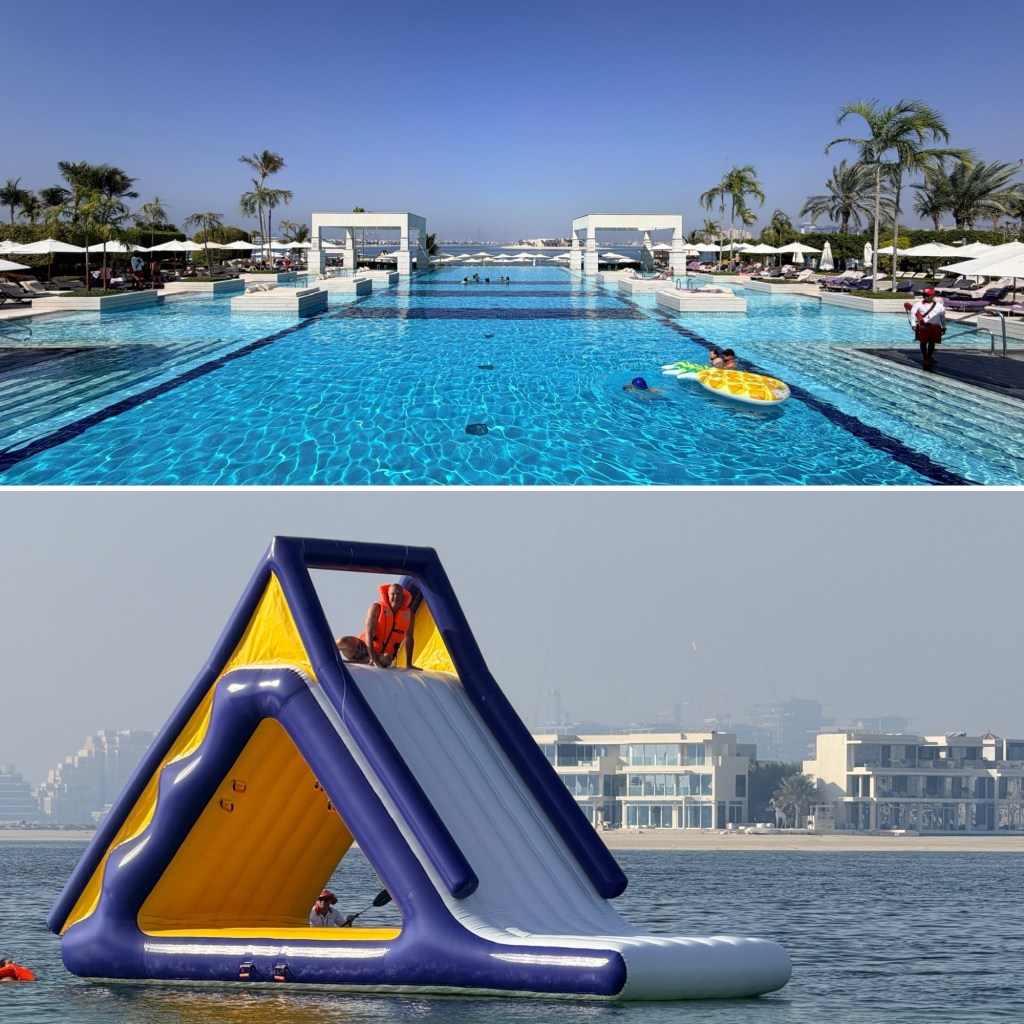
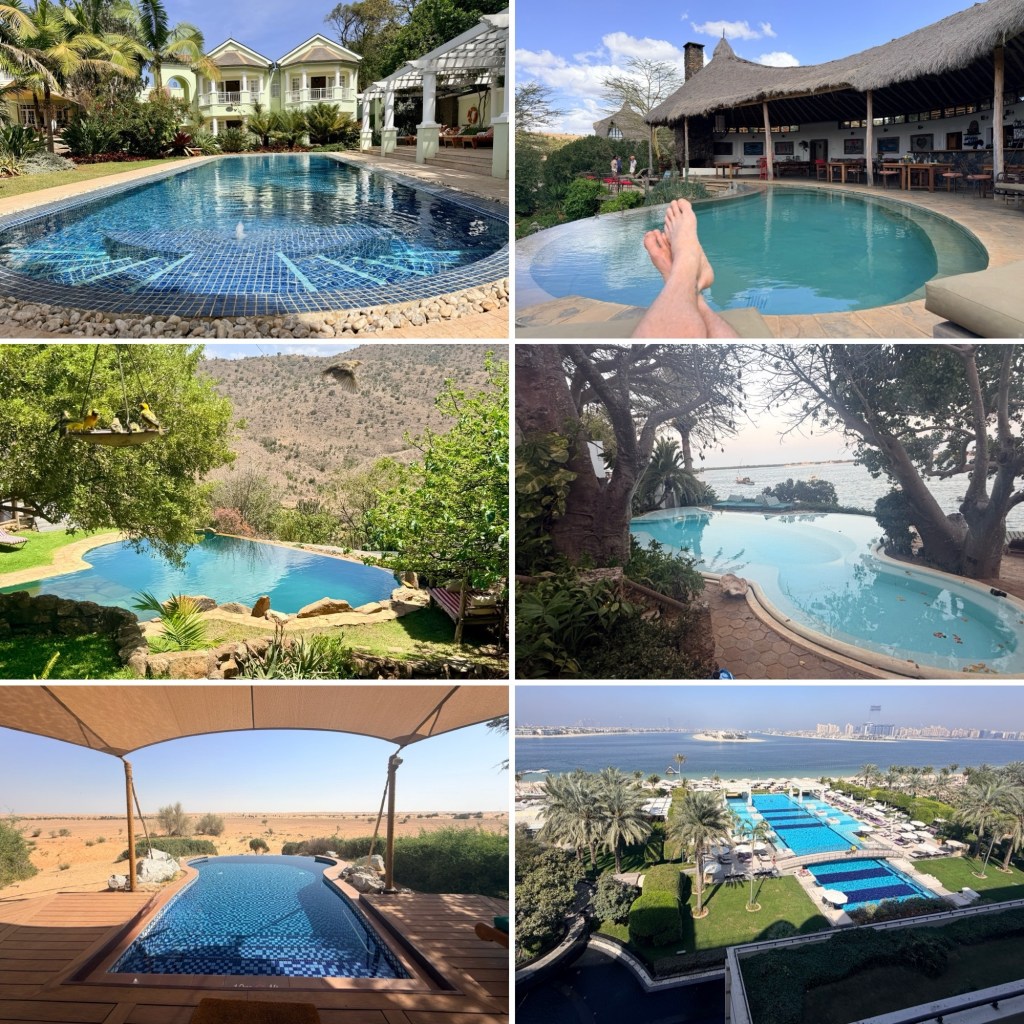
While swimming wasn’t a focus at all in this journey aside from a few solid open water swims in Lamu, I did splash around in some memorable pools.
Putting a succinct bow on this blog is going to be a bit of a challenge because it was such a magical, marvelous adventure. Here we go… first, traveling and being exposed to different cultures and meeting new people serve as a reminder that puts perspective on what’s real, what’s important, and the realization that happiness is defined personally and uniquely across the globe.
And lastly, this Swahili proverb may best sum up a potential way to live life.
Haraka, haraka haina baracka—-Hurry hurry has no blessing.
Can living life pole pole, with intention and a sense of biofilia—a connection to nature and other living things—help people feel, think, and live better? Hmmm…now that is a thought to ponder.
Kenya is mizuri sana!
Pole pole…
 Goggle Reflections